Mexico City’s Condesa moves at a pace that makes you want to slow down. Tree-lined Avenida Ámsterdam traces a long oval around the neighborhood’s heart, while the side streets open onto Parque México—the kind of park made for wandering with a coffee in hand, watching joggers weave past strollers, and more importantly, the dogs who’ve fully claimed the little lake as their own personal swimming hole. The Art Deco buildings feel lived-in rather than preserved: balconies spilling with plants, ground floors converted into the kind of restaurants, wine bars, and cafes that fill up by noon and stay full.
I averaged over three cups a day when staying in Condesa, not out of discipline but rather, pure FOMO. The neighborhood has become one of the more compelling pockets of Mexico City’s specialty coffee scene, dense enough with great options that you’re rarely more than a few blocks from something worth stopping for. What makes it feel distinct from, say, the popular Roma neighborhood is Condesa’s setting and pace: outdoor tables spill onto sidewalks shaded by trees, and the neighborhood’s European-inflected grid makes it genuinely walkable in a city that otherwise fills up with rush hour traffic all day. Drinking coffee here feels like part of the rhythm of the place.
The cafes that have taken root in Condesa are telling a coherent story about Mexican specialty coffee, sourcing from local Mexican regions like Oaxaca, Chiapas, and Hidalgo, often working directly with producers, often roasting in-house or through close collaborators. The neighborhood draws a creative, intentional crowd, which seems to have pushed owners to keep raising the bar. What follows is a guide to the spots worth building your mornings or afternoons around.
Chiquitito
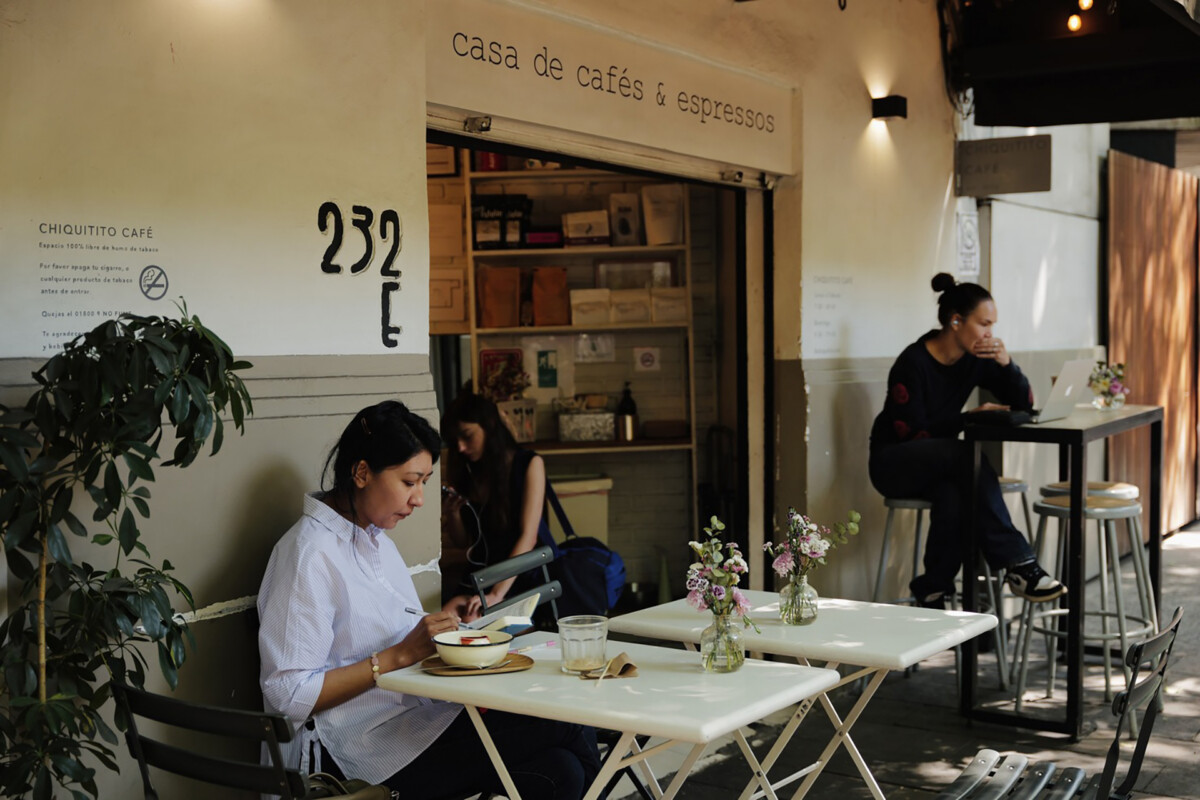
Walking past the corner of Alfonso Reyes and Aguascalientes, it’s easy to miss Chiquitito. Tucked into an oddly shaped space, it’s the kind of spot that doesn’t announce itself. What gives it away is the foot traffic: a steady stream of people filing in, another streaming out clutching brown cups stamped in bold type.
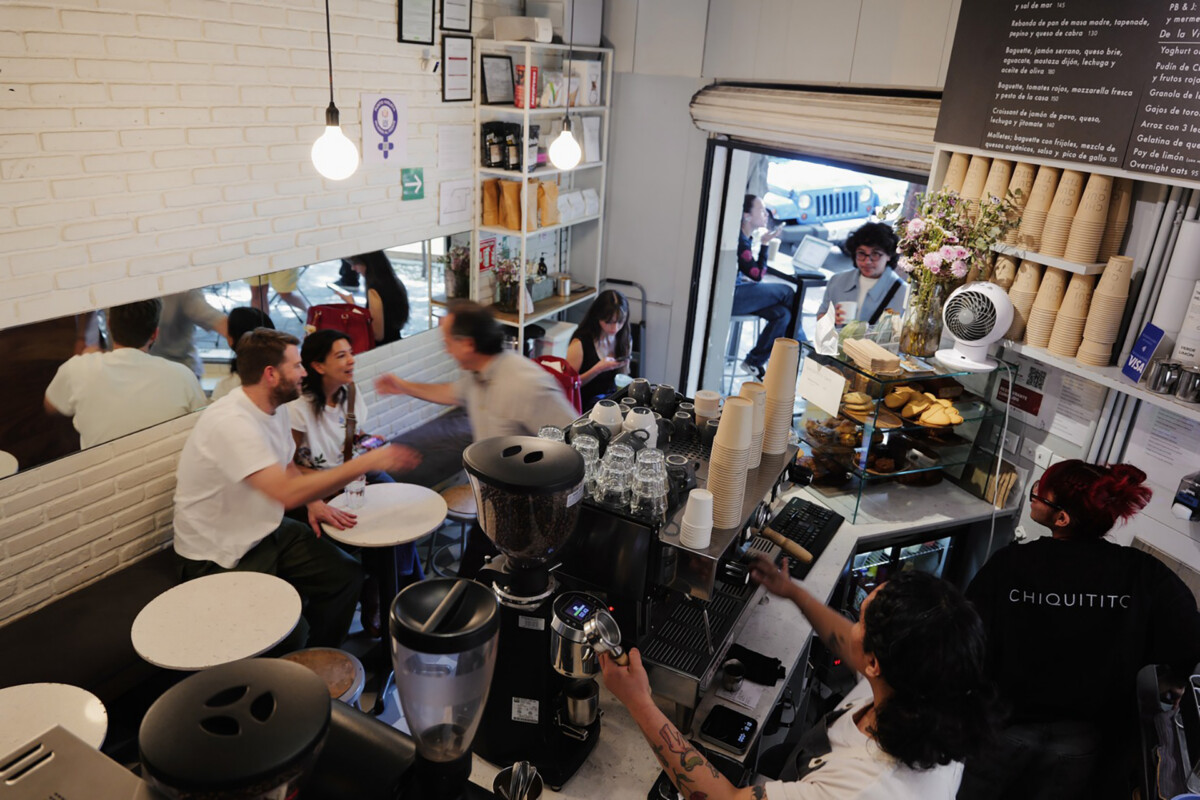
Step inside and the name earns itself immediately. Chiquitito means very tiny, and the space delivers with geometric mosaic tiles underfoot, a pastry case crowded with morning options, and compact indoor seating angled toward the bar. That bar is the main event: a gleaming La Marzocco and Mazzer grinder pulling shots with beans from Boca del Monte, Veracruz, and behind it, a back wall stacked with AeroPress, Chemex, French press, and V60 setups. Pick your method. The pour-over arrives in a precisely measured glass beaker, the oat latte is smooth and well-balanced, and the cinnamon morning bun from the pastry case is reason enough to stay for a second cup.
Founded in 2012 with a focus on fair trade and traceability—”from the producer and the bean to the barista and the cup”—Chiquitito now has several locations across the city, but the Condesa original still feels like the neighborhood’s living room. On nicer days, grab one of the sidewalk chairs. There’s no reason to hurry.
Cardinal
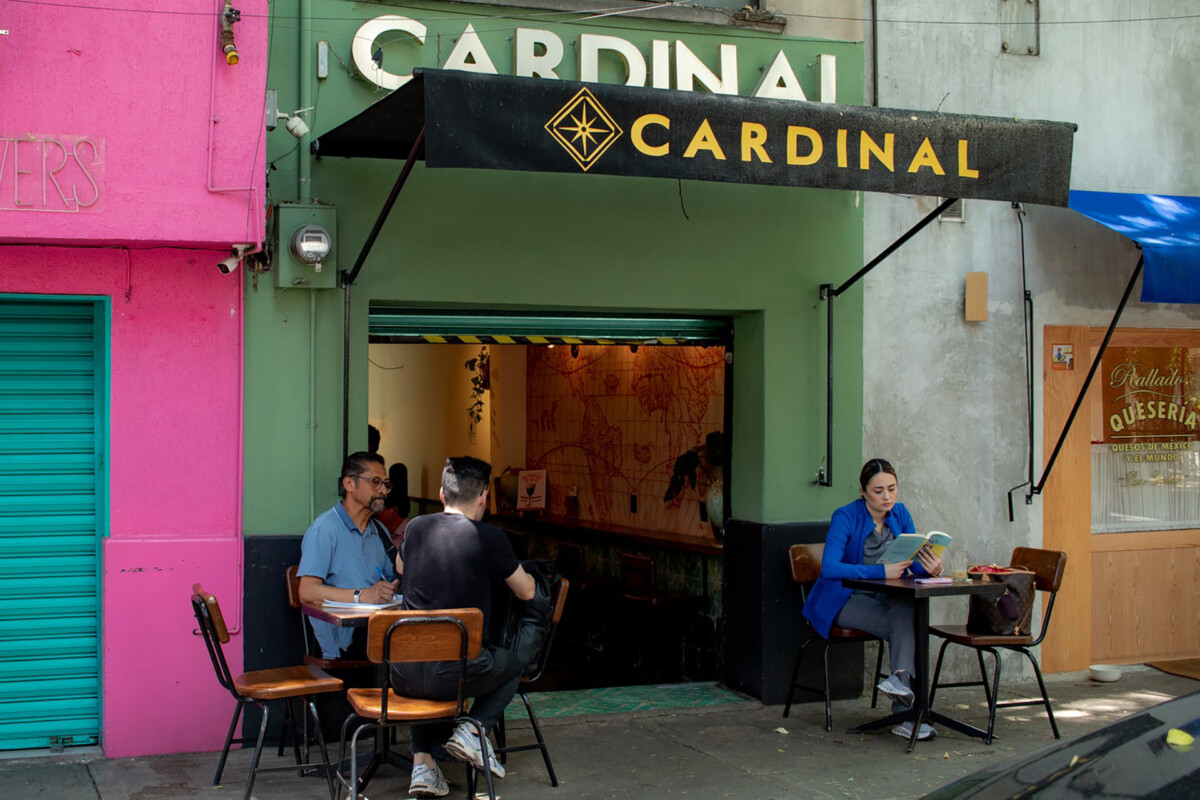
A fittingly calm pastel green storefront on Campeche hides another tiny cafe. Step inside and the interior opens into deep shades of green and blue, a red outlined atlas covering one wall, globe trinkets on shelves, and a curved bar of weathered reclaimed wood that somehow makes the whole place feel like a very good idea someone had a long time ago. Presiding over the bar is a black onyx pig, guarding the La Marzocco and Mazzer espresso bar setup.
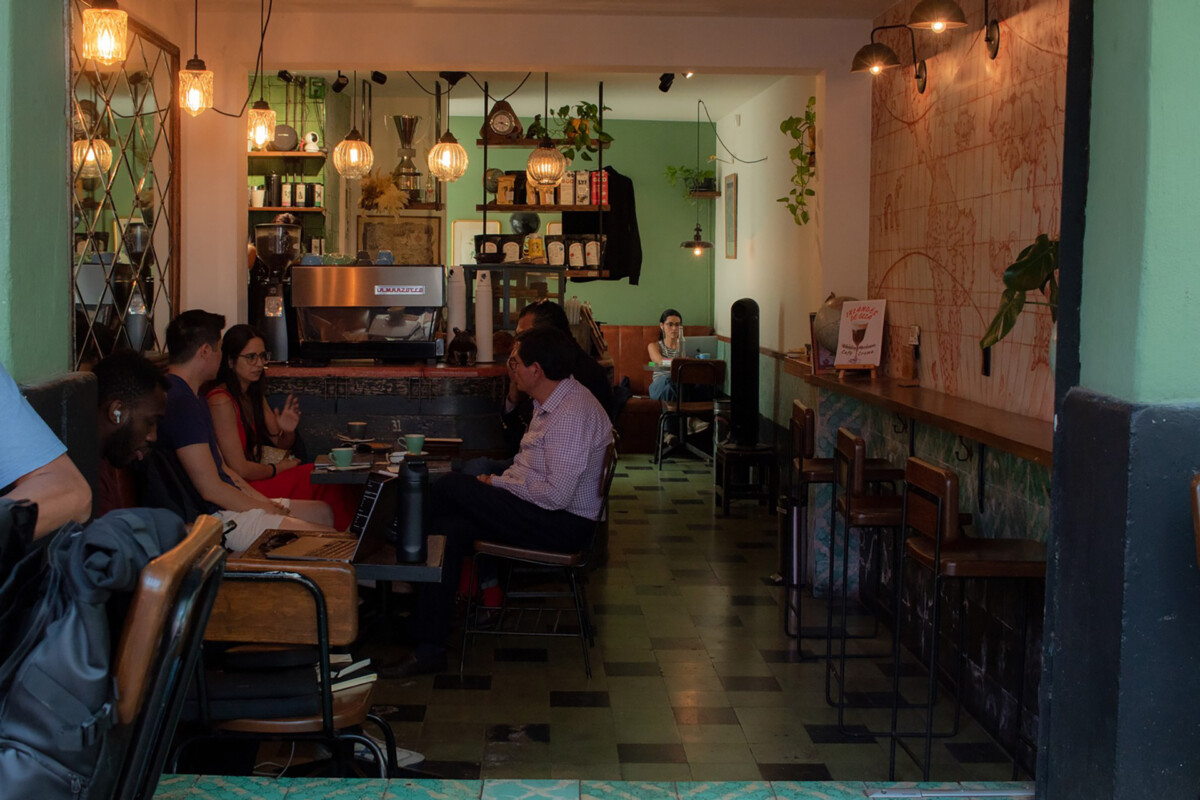
Come afternoon, the vibe shifts. Some guests combine their caffeine fix and afternoon treat in one shot with an affogato; others skip straight to cocktails. The Serpientes and Escaleras menu—Snakes and Ladders, rolls out a short list of coffee-focused cocktails including a Carajillo and a Coffee Spritz. It’s a cafe that knows exactly how to close out a Condesa afternoon.
Libertario
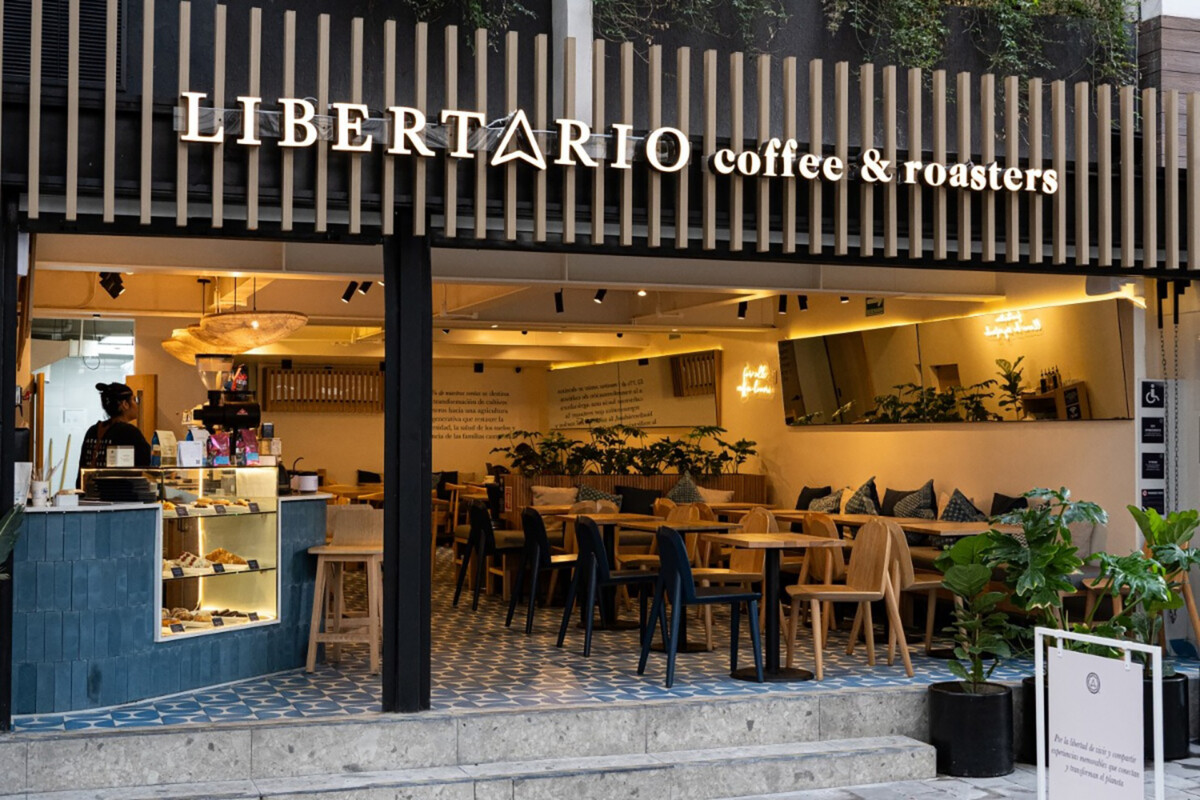
Instead of listing origins, Libertario asks you to pick a profile. Paz is balanced and caramel-sweet. Libre is intense and fruity. Rock is rebellious and eccentric. Punk, predictably, goes further—extravagant and juicy. It’s a menu system that tells you exactly what you’re about to drink without making you feel like you’re being quizzed. With Colombian roots and founded in 2015, this roaster-cafe has built its identity around intention: 3% of every sale goes toward regenerative agriculture initiatives, and the sourcing runs deep, with relationships built directly with the growers in Colombia and Panama.
Your barista dials in your chosen profile on the Dalla Corte XT, a precision Italian machine that matches the cafe’s aesthetic: white body, warm wood panels, backlit and serious-looking behind the blue tile bar. The mosaic floor, the hand-painted tiles, the signage reading coffee made with purpose—it all ties together as you sit back and enjoy your cup. A lineup of grinders flanks the machine, including a matching Dalla Corte dedicated to the espresso program.
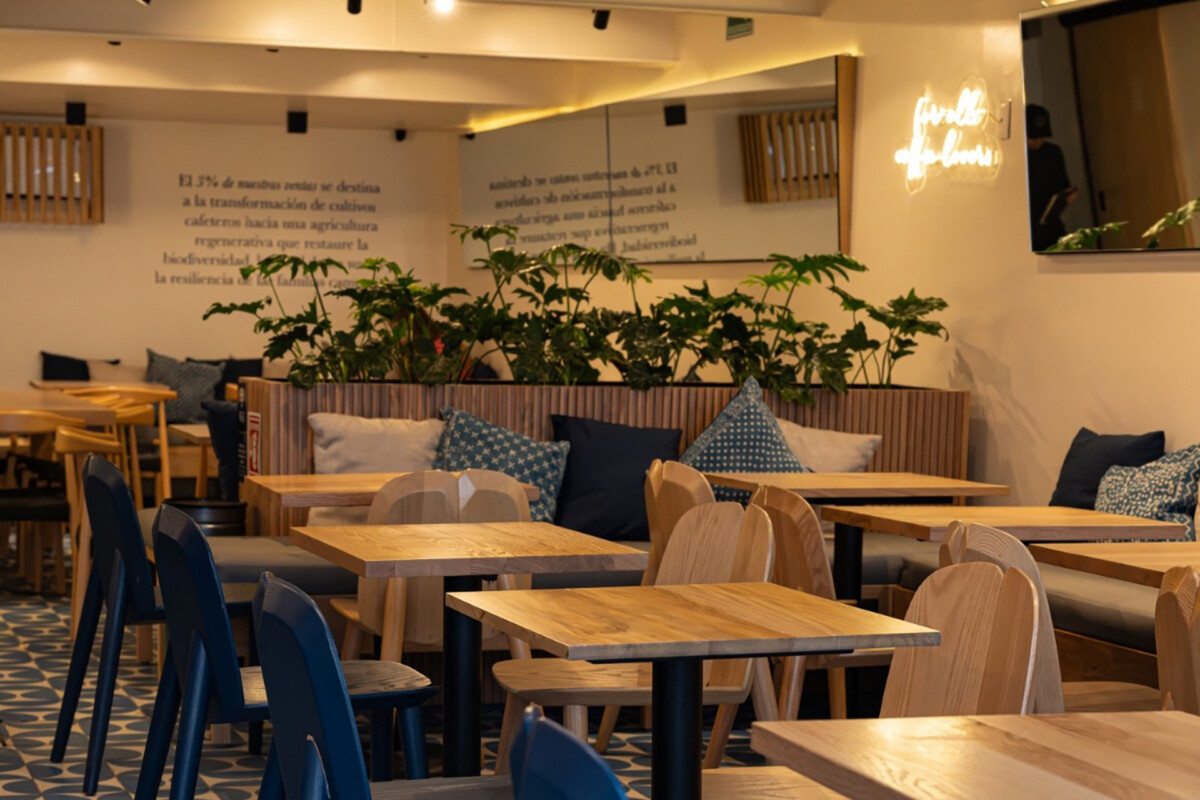
It’s a genuinely clever system—it shifts the conversation from geography to sensory experience without dumbing anything down. You leave knowing something real about your own palate. Order a flat white in Punk and see what happens.
Malcriado
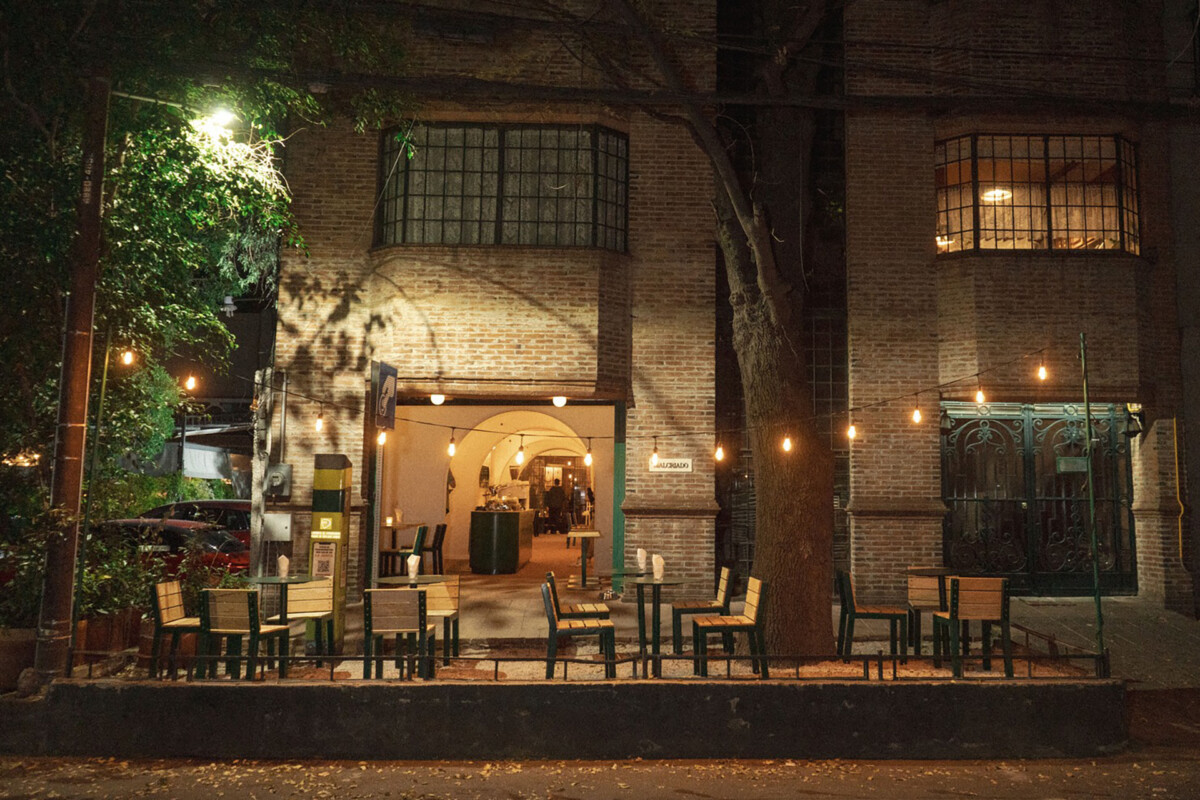
There’s something a little rebellious about a wine bar that cups its beans twice a day. Malcriado, which translates roughly to “raised badly,” operates as a cafe through the morning and a natural wine bar by evening, and takes both halves of that identity seriously enough that neither feels like a cover story for the other.
Tables spill out onto the Atlixco sidewalk, fully absorbed into the neighborhood’s rhythm. Emilio Patiño runs the coffee bar with the rigor you’d expect from someone who trained at Cafeología, a coffee research and production project in San Cristóbal de las Casas, Chiapas, which is also where the beans come from. The espresso runs on a La Marzocco, and the team tastes every lot twice daily to track exactly what’s in the cup.
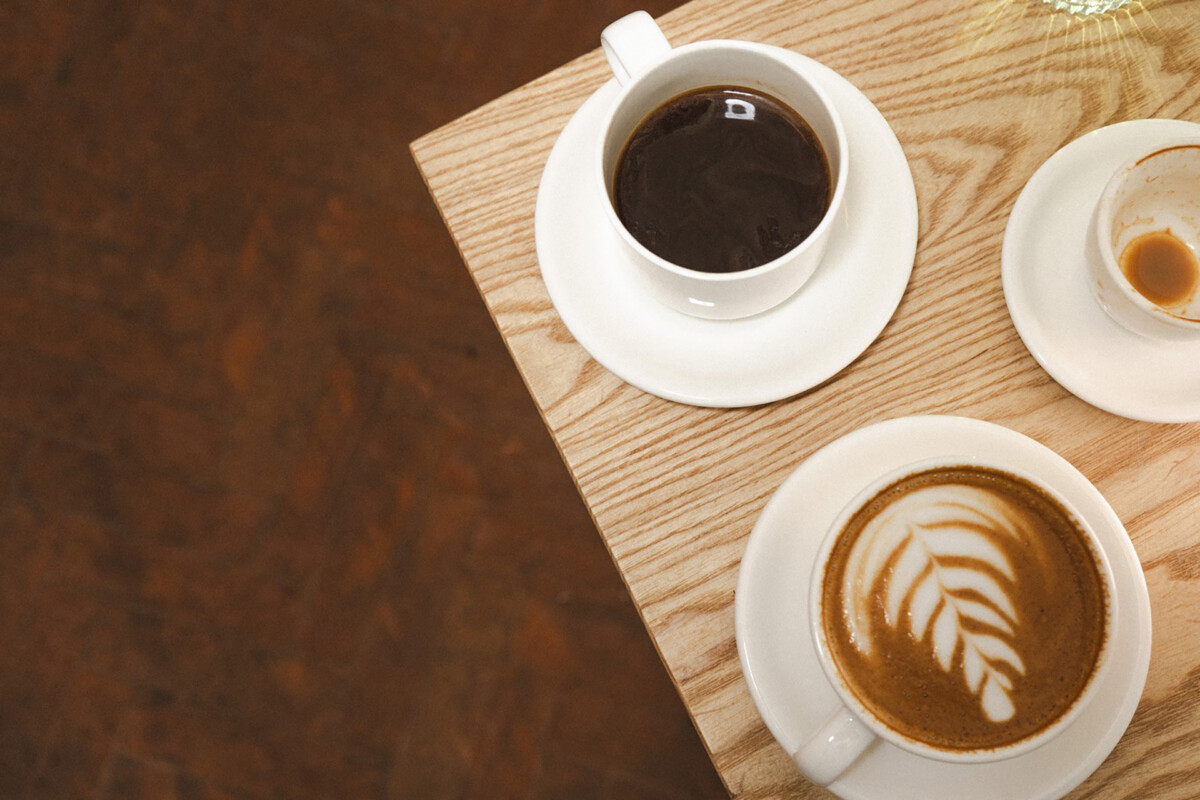
Chef Valeria Velásquez, who has cooked in Bogotá, Copenhagen, and New York, runs a kitchen with a Mediterranean sensibility built on Mexican ingredients. The brunch menu is short and confident, an excellent excuse to linger, order another coffee, a glass of natural wine, or both.
Bakers
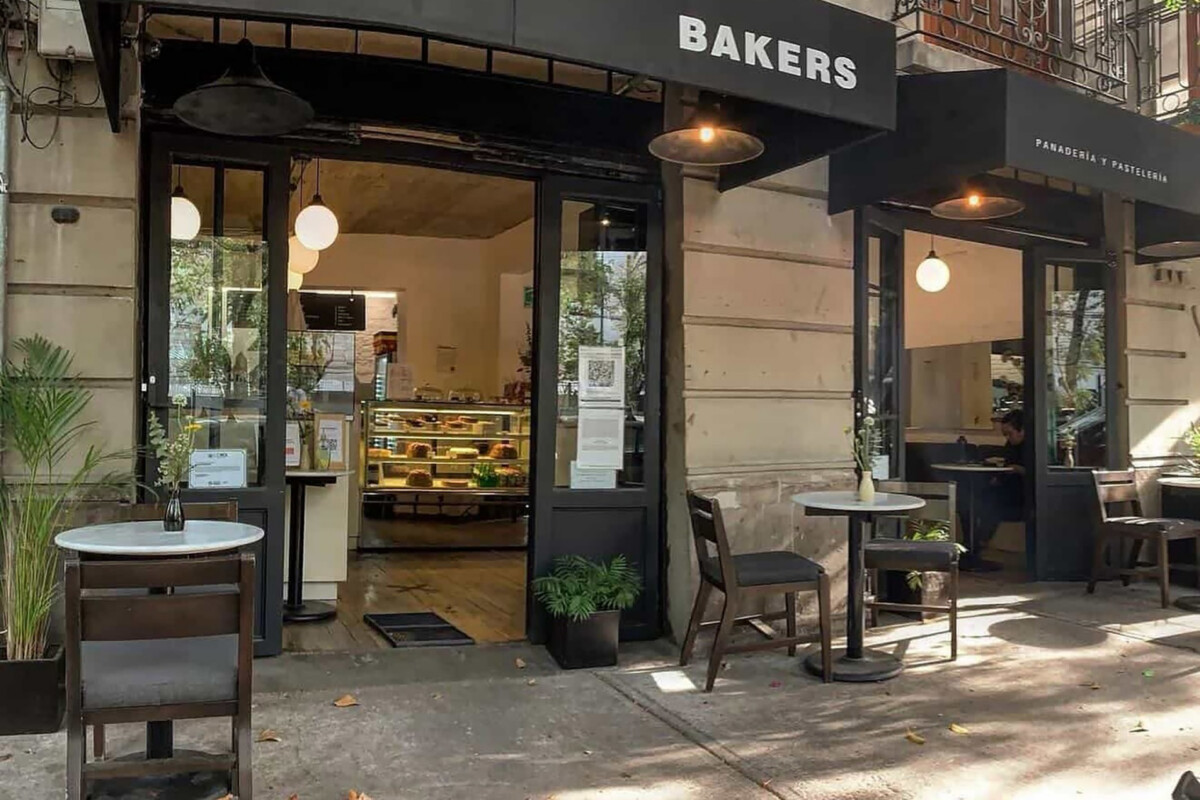
The smell of freshly baked pastries pulls you through the door at Bakers before you’ve had a chance to make a decision about it. Sitting on the border of Roma Norte and Condesa, it earns a place on any neighborhood coffee crawl, and the pastry case will leave you spoiled for choice.
A Nuova Simonelli machine anchors the espresso program, giving the coffee the serious foundation it deserves. The sleek wood-paneled interior and extended sidewalk seating keep things relaxed.
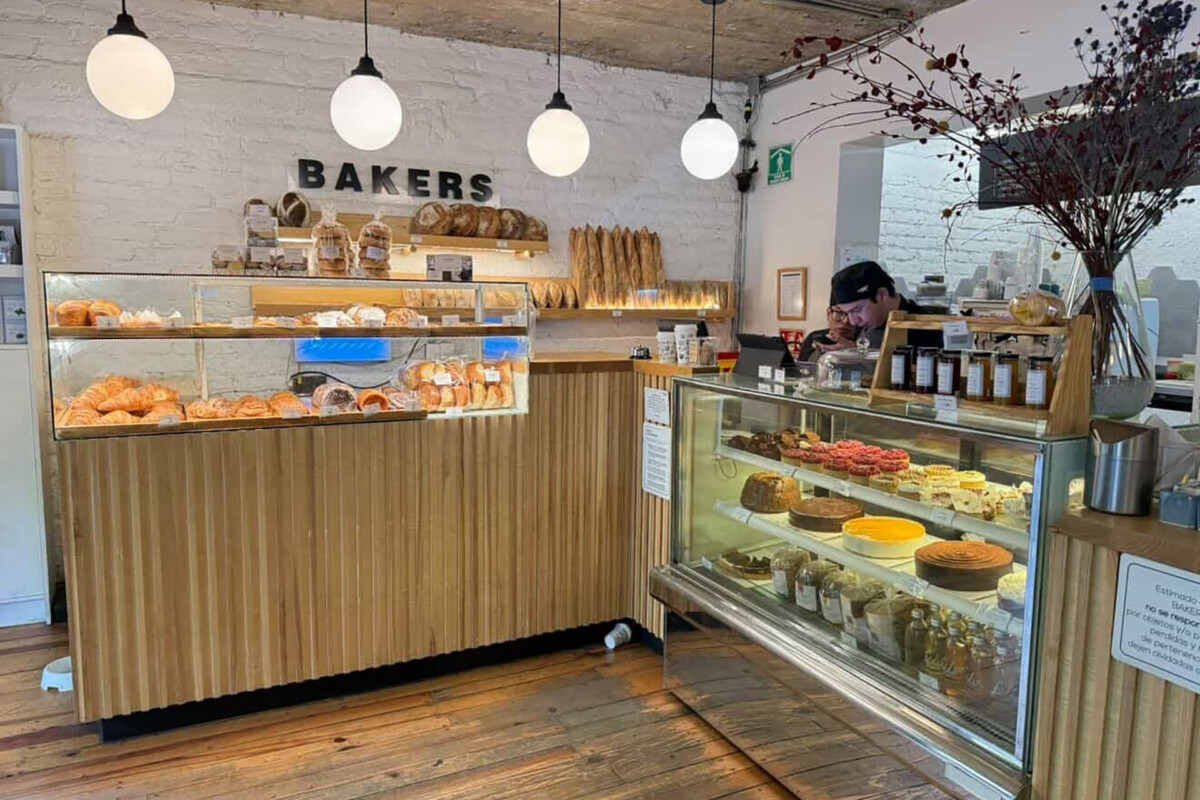
What makes Bakers distinct is how well the baked goods earn their place alongside the coffee. Everything is made in-house. The baguettes stand tall in single file on the back shelves, and the pastry case pulls in equal weight—viennoiserie and a rotating cast of baked goods. The oreja and cruffin are both excellent: flaky, light, and precisely the kind of thing you want with an espresso in hand. When available, the seasonal guava and cheese cruffin is unmissably Mexican, the kind of flavor that reminds you exactly where you are.
Blend Station
Blend Station is one of the few genuinely spacious cafes in Condesa—designed by Mexican studio Futura, seating up to 70, with plants and indoor trees throughout. Plan to post up for a while; the laptop crowd has already figured this one out.
The coffee program is what earns the real attention. Co-owner Abril Solis is a certified Q grader and national barista competition judge, and Blend Station roasts all its own beans—100% Mexican—on a 12kg Diedrich at their lab outside the city. Sourcing runs across micro-lots in Oaxaca, Chiapas, Hidalgo, Veracruz, and Puebla, organized on the menu by processing style: washed, honey, and natural. Current offerings include a Veracruz Ixhuatlán Gesha on red honey and an Oaxaca Miahuatlán Bourbon natural; for the more adventurous, a line of barrel-aged Típica Bourbons finished in white wine, rum, and whisky.
Behind the bar, a Faema handles espresso, while the counter houses a full V60 lineup alongside a towering cold drip setup that looks pulled from a laboratory. Blend Station’s “Café con Causa” program directs financing back to the farming communities behind the beans—making the cup feel as considered as everything else here.
Nishtha Dalal is a freelance journalist based in New York. This is Nishtha Dalal’s first feature for Sprudge.
All photos courtesy of the cafes