
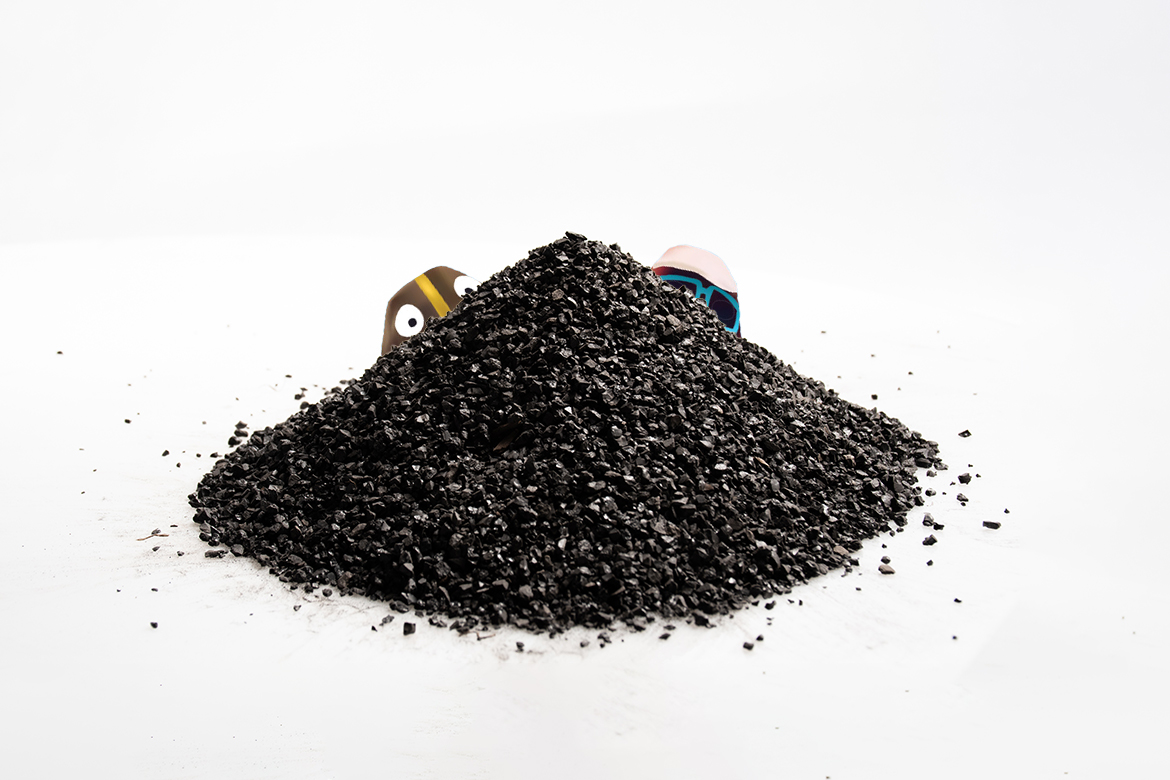
Much of coffee grounds’ value as an ecologically-minded alternative comes from its ability to be converted into biochar. From concrete to insulation to cleaning contaminated water, coffee can do it all after it has been converted into biochar. And with all the many uses already found for biochar, researchers are looking for new ways to producer it better and faster. Which is exactly what a team at the Korea Institute of Geoscience and Mineral Resources (KIGAM) did. They’ve created a new process that turns used coffee grounds into biochar in under two minutes, and they believe the biochar made from this process can be used as an alternative to charcoal.
Biochar is traditionally made through a process called pyrolysis, whereby coffee grounds are subjected to high heat in an oxygen-deprived environment for anywhere between 30 minutes and a few hours. Before pyrolysis, the coffee grounds must undergo an initial pre-drying phase.
As reported by Futurism, published recently in the Chemical Engineering Journal, researchers from KIGAM created a new method called flame plasma pyrolysis, where “coffee waste is put under immense pressure using plasma” reaching temperatures as high as 900°C (1,652°F). The extreme heat cause the moisture trapped in the coffee to “kick off hundreds of microscopic explosions,” creating the lightweight, porous structure sought after in biochar. The entire process takes just 90 seconds to complete and requires no need for pre-drying.
And it’s more than just about speed. The removal of the pre-drying component solves one of the problems with upcycling coffee. Coffee grounds have a high moisture content that traditionally needs to be removed before it can be turned into biochar, but doing so, especially at scale, is a major hassle that throws up barriers against more widespread adoption. Removing the need to pre-dry make biochar a more easily viable alternative.
An an energy source, researchers say this new biochar is “comparable to that of anthracite coal,” which is the highest grade of coal containing the most pure carbon by percentage. It’s highly efficient at producing heat and is the cleanest burning coal variety.
So pretty soon, that coffee you had at Anthracite could itself become anthracite that could then heat the water to make another cup of coffee at Anthracite. It’s the circle of life.
Zac Cadwalader is the managing editor at Sprudge Media Network and a staff writer based in Dallas. Read more Zac Cadwalader on Sprudge.


