Good: Keeping a coffee houseplant alive.
Better: Growing it to three feet in height.
Best: Flowering and producing cherries.
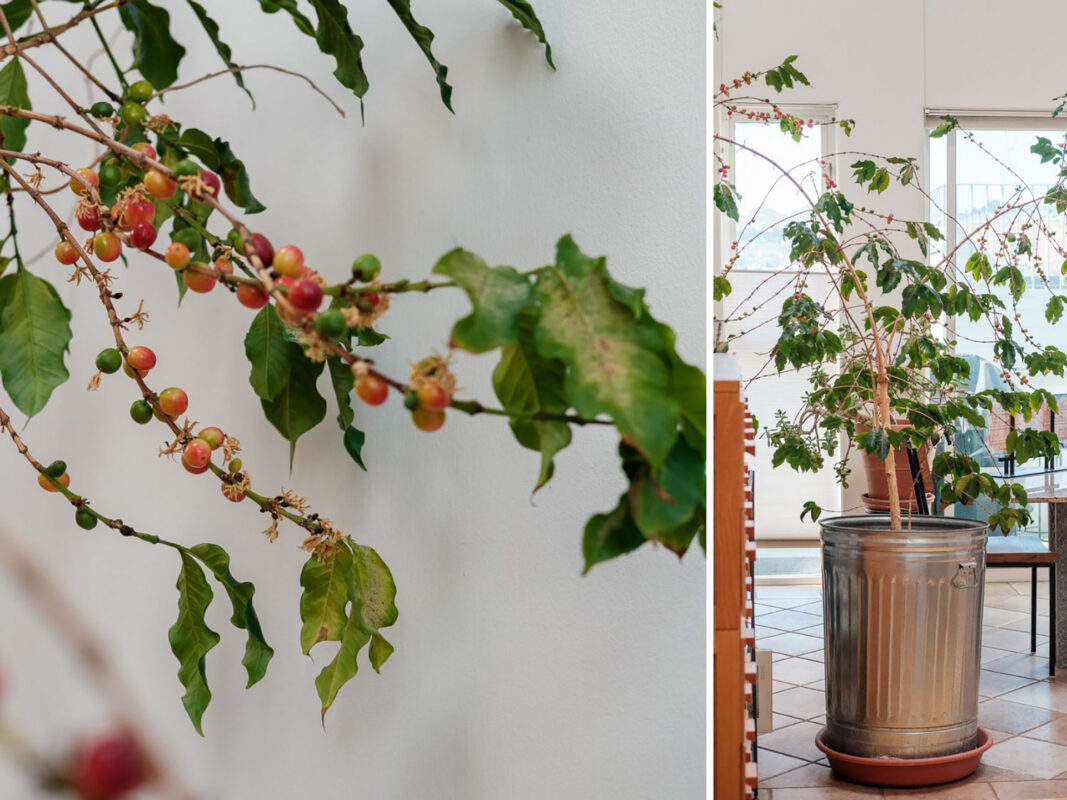
For many indoor houseplant enthusiasts, flowering is a bonus and not expected, especially if the environment does not reflect the plant’s native conditions. Even having a few flowers on an indoor coffee plant is a big achievement, let alone producing enough to process. I had the pleasure of chatting with Larry Berger, a coffee enthusiast and owner of an incredible Typica variety coffee plant that has produced thousands of cherries across three consecutive harvest seasons, and more post-stumping.
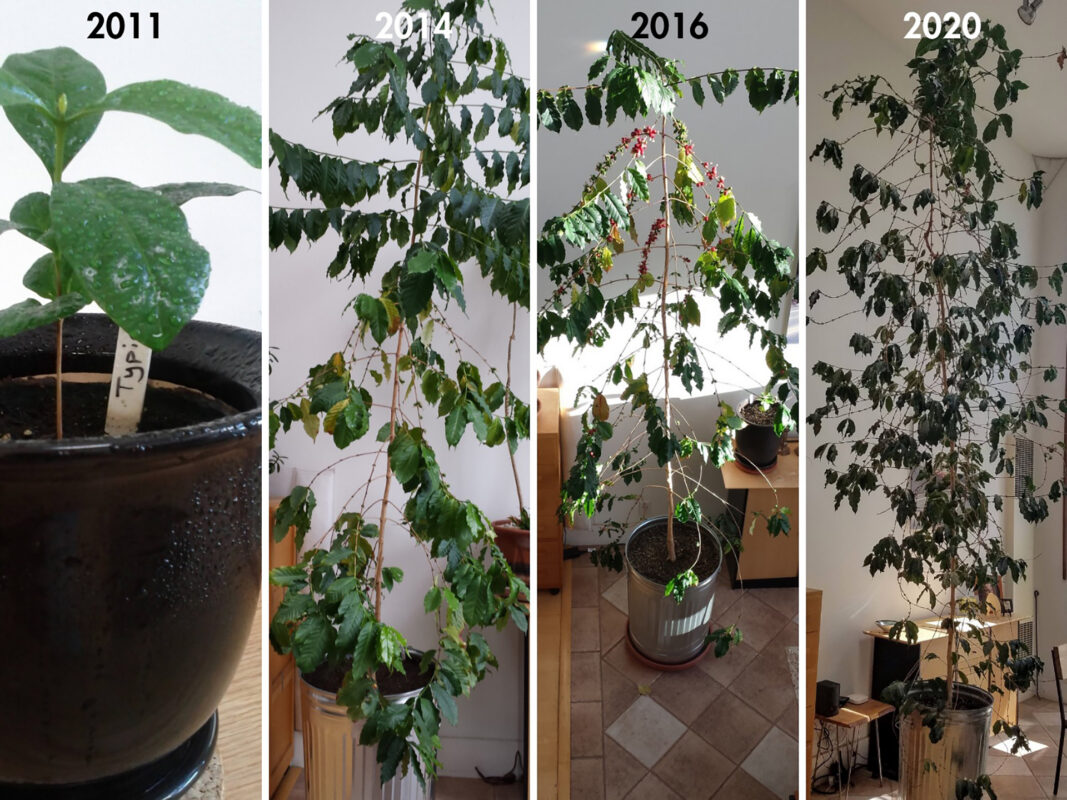
Berger received his plant as a little soldier (one-inch tall) from a Bay Area coffee professional in 2011 and nurtured it to its tree size today. In 2020, it was reaching too close to his 16-foot ceilings and becoming spindly, so he stumped it. Flowers began appearing two years later and continued every year since.
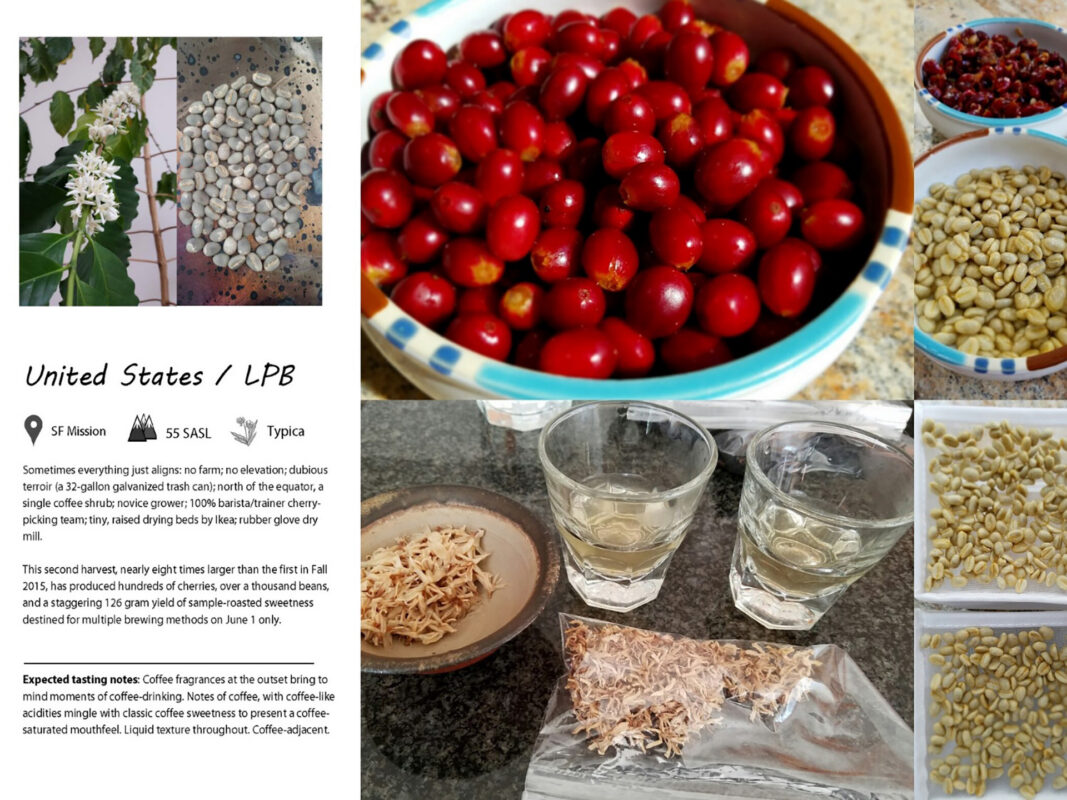
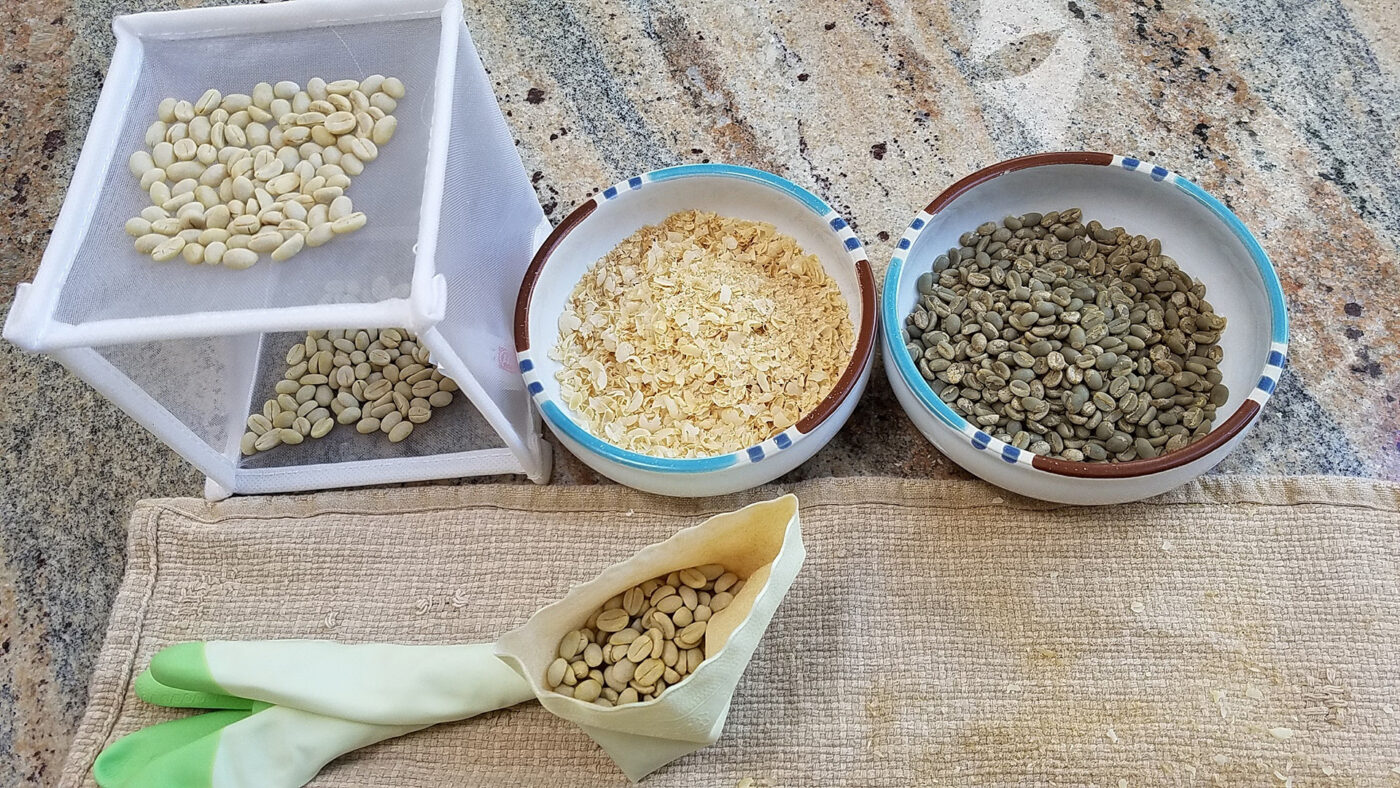
His nanolots went through a unique processing method; some might say it was an experimental washed process. Removing the cherry skin was easy, but the mucilage was challenging. “What really worked well is to take as much of the cherry off as you can and then stick them in your mouth,” he says. “And use your teeth to depulp them basically; get all the mucilage off.” He assured me that he fully rinsed them all afterward. To dry, he flipped mesh IKEA drawers on their side, creating a mini raised bed. A few weeks later, he placed the dried seeds in a rubber glove and rolled them to remove the parchment.
Berger brought his first harvest to Four Barrel, where he was advised to mix his 18.3g of processed green coffee in with Maragogipe, one of the largest coffee seeds, and then sample roast them. The sample roaster needed a minimum of 100g to roast; so afterwards, he painstakingly hand-sorted his production.
For fun, Berger wrote up his tasting notes and description to match Four Barrel’s cards.
A few weeks after the interview, I visited the tree in person and was impressed by the 300+ cherries thriving on its branches. Mind you, we’re in San Francisco, 55 SASL. It really showcased how important the environment is to houseplant growing conditions. It’s a sun-drenched loft with a wall of windows and a few skylights. When you have ideal growing conditions like this, you’re already miles ahead.
Back to when you said you were stumping it, why did you decide to do that? Was it because it was getting too tall or because you wanted to give a cutting to someone?
It was going to hit the ceiling, even being 16 feet, and it wasn’t looking that great. All the new growth was at the top; it was pretty bedraggled, not so healthy. I was very concerned, I thought that would be the end of the whole thing and it had been many years. A coffee farmer who I had run into somewhere or through someone else in coffee, said, “No, no, that’s common practice is to stump them way back and then they have a new life,” so I got lots of advice on how to do that. It looks better than it used to before. It’s much shorter but a little bushier.
I appreciated like never before what is involved in drinking a cup of coffee, which is hundreds of beans. Somebody did that. Even with machines—and I’ve seen a lot of photos at origin—but I had a renewed appreciation for all this because it’s just such a labor-intensive process from beginning to end, cultivating on the tree. The depulping, the milling, the sorting, the roasting.
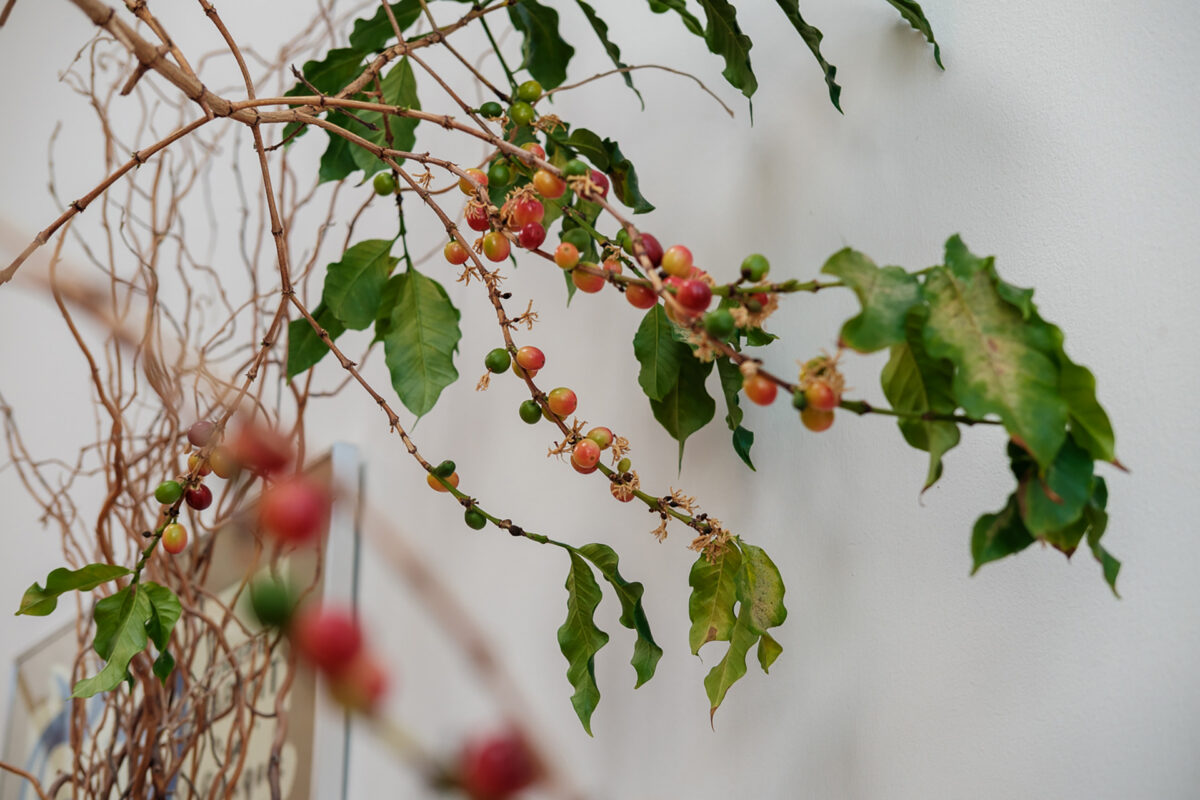
And this is one tree.
Right. I’m working in these quantities that’s not even a bag. I mean, my bumper crop is a third of a 12 ounce bag, roughly.
One thing I probably did right was continue to match the pot size to the tree size or the shrub size. I kept re-potting it into bigger and bigger pots, but, that was quite an ordeal. My wife and I cleared a space on this large table and manipulated this 16-foot-tall thing ultimately into a 32-gallon trash can. You want to let the roots grow vertically, and that’s more important than the circumference of the pot.
A subsequent harvest produced 127g of roasted coffee, then a very small bumper harvest that was not roasted. Instead, he gifted them to local baristas.
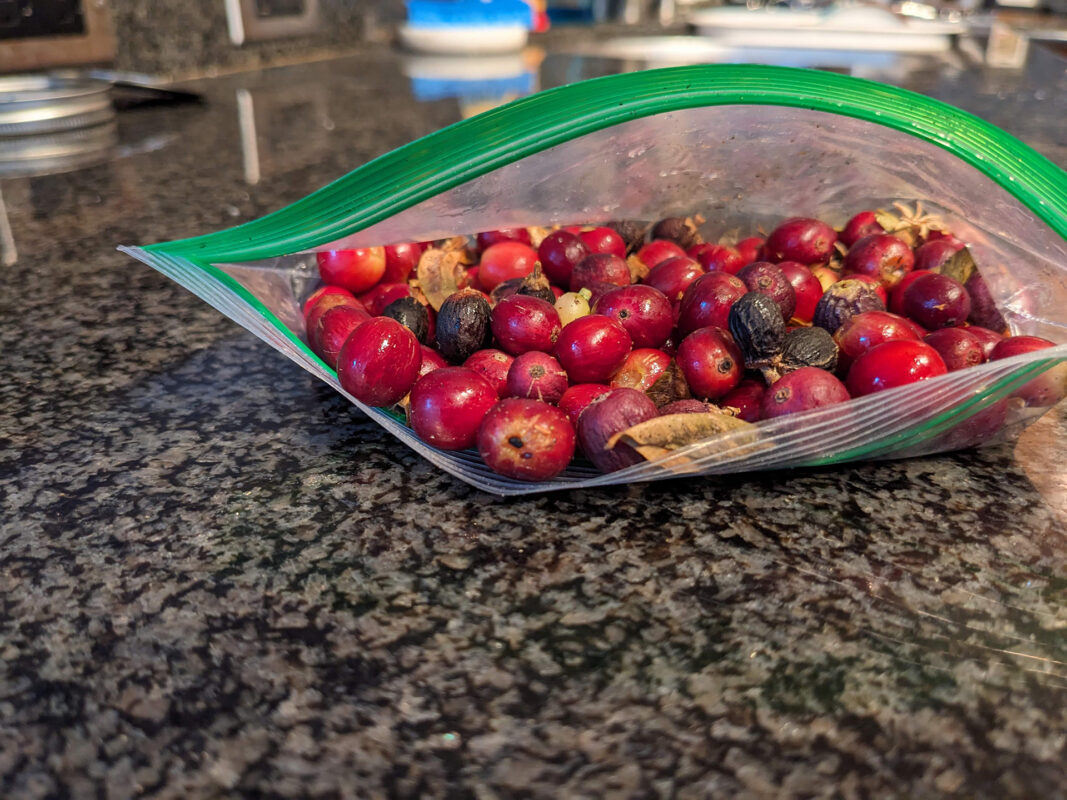
I would give ripe cherries to people—I know a bunch of people in coffee and it was fun to give them the cherries. Baristas that I got to know just from going into coffee shops—they might not have ever seen an actual cherry or tasted it, so I would do that a bunch of times. I’ll definitely keep doing that with the harvest that comes, because that’s fun to share with people. They can’t get to go to origin, but they can get a totally ripe cherry that I picked an hour earlier.
At the end of my visit, I tried one deep red cherry and then immediately stuck the seeds into a wet paper towel. Fingers crossed for one of them to germinate!
Jenn Chen (@thejennchen) is an Editor At Large at Sprudge Media Network. Read more Jenn Chen on Sprudge.