
If you deal with acid reflux, GERD, or just a sensitive stomach, your morning coffee might be doing more harm than good. The culprit is not the caffeine — it is the acidity. Low-acid coffee has exploded in popularity as more people realize they do not have to give up their daily cup to feel better. These coffees have a higher pH level (closer to neutral on the 0–14 scale) and contain fewer of the compounds — like chlorogenic acid and quinic acid — that trigger stomach discomfort, heartburn, and enamel erosion.
The good news is that low-acid coffee does not mean low-flavor coffee. The best options deliver a smooth, full-bodied cup that goes easy on your gut without sacrificing the taste and ritual you love. Below are the best low-acid coffee beans you can buy right now, followed by practical tips on roasting and brewing to reduce acidity even further.
Best Low Acid Coffee Beans
Several factors determine how acidic a coffee is: the bean origin, altitude where it was grown, roast level, and how it is brewed. On the pH scale, most regular coffee lands somewhere between 4.5 and 5.0. Low-acid coffees generally measure pH 5.0 or higher. For reference, water is neutral at 7.0, and battery acid sits at the extreme end near 1.0. The coffees below are specifically chosen or processed to minimize acidity while maximizing flavor.
1: Lifeboost Coffee Whole Bean Medium Roast
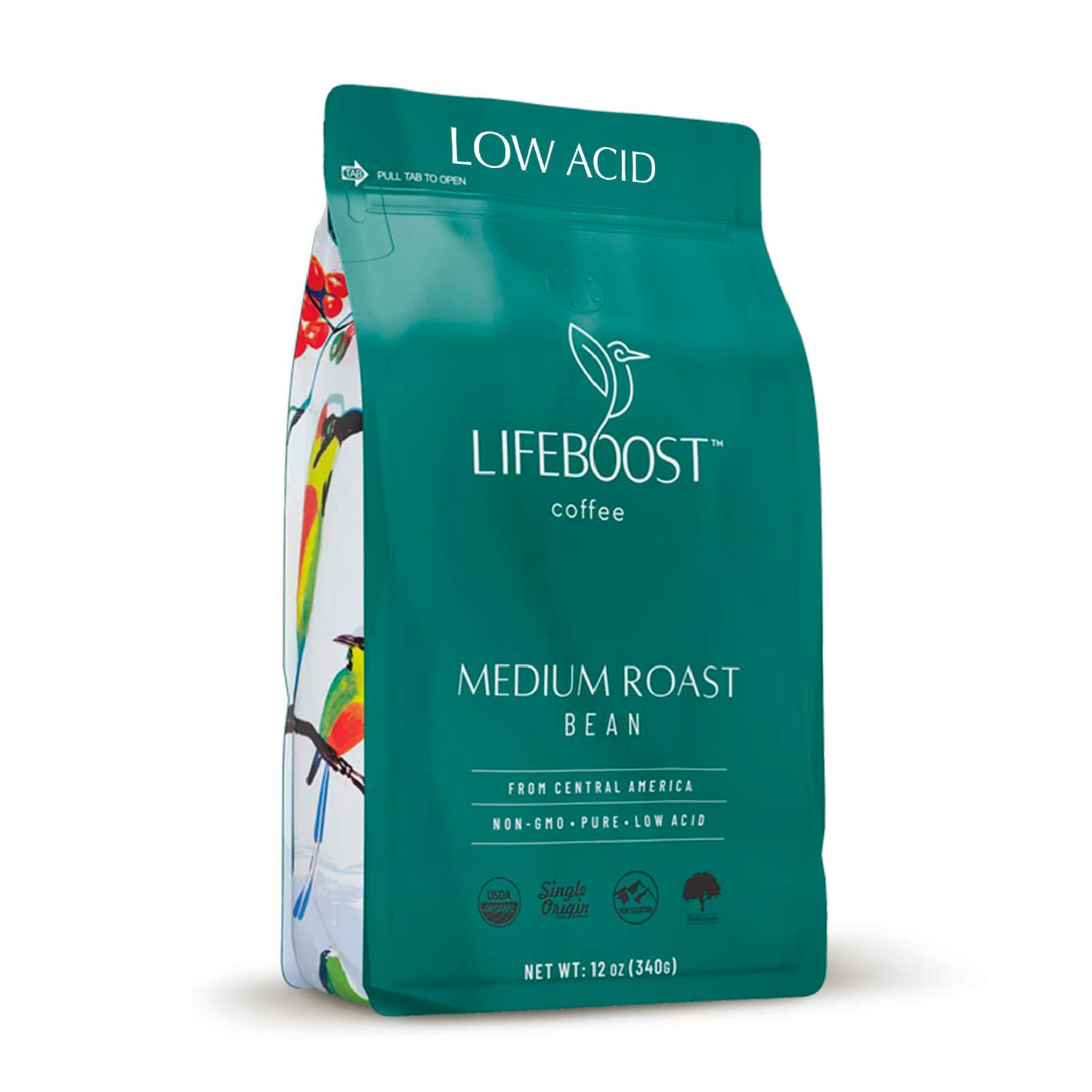
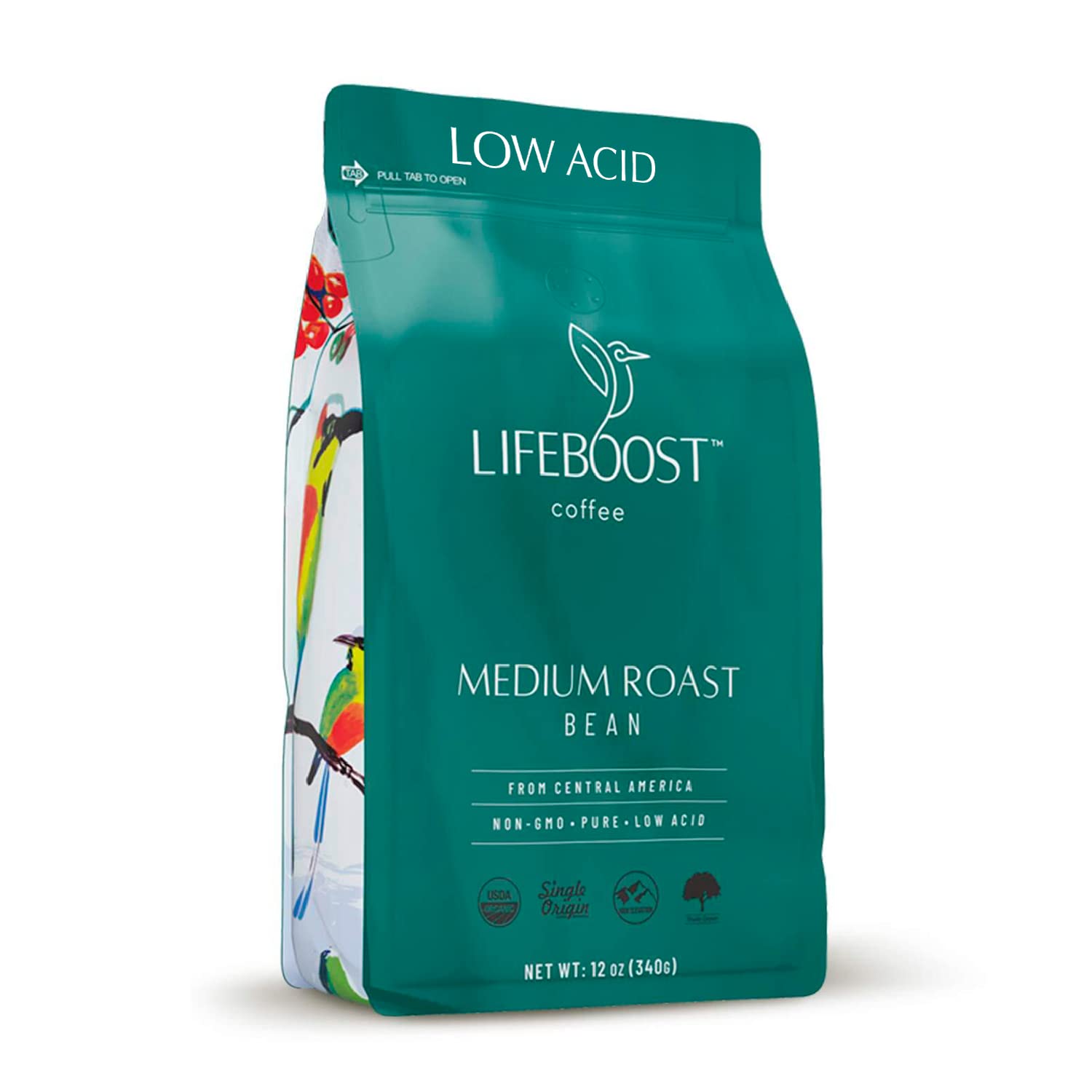
Lifeboost is the gold standard in low-acid coffee and my top overall pick. Ethically sourced from the mountains of Central America, Lifeboost prides itself on being single origin, fairly traded, and grown in high-elevation shade for the lowest acid coffee possible. The beans are hand-selected, sun-dried, and spring water washed. What sets Lifeboost apart is their TrustPure process: every batch is third-party tested for mycotoxins, heavy metals, pesticides, and over 400 other toxins. Their pH consistently measures 6.0 or higher — well above the average cup of coffee at 4.85. Easy on your teeth and your stomach, the medium roast delivers a balanced, smooth flavor that works beautifully whether you brew with a French press, drip machine, or espresso setup.
- pH of 6.0+ (significantly less acidic than most coffees)
- Ethically sourced, USDA certified organic, non-GMO, single origin
- Third-party tested for 400+ toxins including mycotoxins and heavy metals
- Flexible purchase options — available in whole bean, ground, K-Cups, and cold brew grind
2: Volcanica Low Acid Coffee Medium Roast

Volcanica is on the shortlist because it brings an ultra-low pH level of about 5.2–5.3, which is less than typical coffees on the market. This medium roast is a blend of naturally low-acid beans from Brazil, Sumatra, and other Arabica sources grown at lower altitudes — a key factor in reducing acidity. Flavor notes of chocolate, nuts, and a hint of tangerine give it complexity without sharpness. It is also one of the few coffees on this list that is both vegan and kosher certified. If you are looking for a pre-ground option that keeps things simple, Volcanica is an excellent choice. The water you use can further affect the acidity of your cup, so consider pairing it with filtered water for the best results.
- Ultra-low pH of approximately 5.2–5.3
- Kosher, vegan, and gluten-free
- Smooth, full-bodied flavor with chocolate and nut notes
- Available in whole bean and ground
3: Minimalist Luxe Organic Medium Dark Roast

This delicious non-GMO organic whole bean low acid coffee is made from clean, authentic, natural coffee beans. USDA certified organic, these beans are freshly roasted and immediately packed and sealed for freshness. Made from 100% pure Arabica coffee beans, Minimalist Luxe uses one source located in Papua New Guinea — this is important because the coffee is not a blend. Being a single-origin coffee means consistency in flavor and acidity from bag to bag. Grown at high altitude for the best quality beans and flavor, the medium-dark roast hits a sweet spot where acidity drops without introducing the bitterness of an ultra-dark roast. If you enjoy Papua New Guinea coffee, this is a great low-acid way to explore those flavors.
- Single origin Papua New Guinea — not a blend
- USDA certified organic, non-GMO
- High altitude grown for quality and lower natural acidity
- Whole bean — grind to your preferred size
4: Black Rifle Coffee Ground Medium Roast

Black Rifle Coffee’s medium roast was developed to be the best low acid drip coffee you’ll ever taste. With a bold taste and featuring natural vanilla and cocoa aromas, it is a super smooth experience that’ll have you wanting more. Available as either ground or whole bean, this blend of Colombian and Brazilian coffee beans is sourced with extreme care. This company also does its part to help U.S. military veterans with a commitment to hire 10,000 veterans and provide opportunities to their community. Black Rifle has also provided employment opportunities for Afghan refugees.
- Bold flavor with vanilla and cocoa notes
- Colombian and Brazilian bean blend
- Available in ground and whole bean
- Veteran-owned — provides thousands of jobs in America
5: Coffee Land Dark Roast Brazil Coffee

Cultivated at 3,600 feet in Brazil, Coffee Land Dark Roast Brazil Coffee is a single origin non-GMO whole bean coffee that strictly uses 100% Arabica coffee beans. Roasted to perfection with tight quality controls, Coffee Land promises a low acid coffee with hints of toffee, milk chocolate, and dark caramel. This coffee works well with any method of brewing — whether you are using a French press, drip machine, or moka pot.
- Non-GMO, single origin Brazil
- 100% Arabica, cultivated at 3,600 feet
- Interesting flavors of toffee, milk chocolate, and dark caramel
- Slightly more oily than what some might be used to
6: Stone Street Cold Brew Coffee Low Acid Dark Roast

Stone Street is roasted in my home town of Brooklyn, New York. Their dark roast Supremo beans are sourced from the largest and highest quality beans from Colombia. The darker roast makes for a low acid, nutty-chocolate flavor which happens to be perfect for cold brew concentrate. This coffee can just as easily be ground for traditional hot coffee using any means you desire as it is whole bean — try it with a percolator or moka pot for a bold cup. Described as a serious coffee for serious New Yorkers, Stone Street prides itself on sourcing organic, fair trade, rainforest-safe, and kosher beans.
- Roasted in the United States
- Excellent nutty-chocolate flavor
- Perfect for ultra-low acid when cold brewed
- Kosher certified
7: Lucy Jo’s Coffee Roastery Low Acid Blend

Certified organic and low on acid, this medium dark Brazilian blend is extremely easy on the stomach. It is apparently about 70% less acidic than a traditional cup of coffee — one of the most dramatic reductions on this list. Made in smaller batches of 100% Arabica beans from Indonesia, Lucy Jo’s promises to bring a smooth, sweet, and a little spice to your cup. Family run, you can rest knowing that they ensure the highest quality coffee that is roasted in Upstate New York. It is also one of the more affordable low-acid options you will find, making it a solid choice if you go through coffee quickly.
- Approximately 70% less acid than traditional coffee
- One of the less expensive options on the list
- Certified organic, small-batch roasted
- Smooth, sweet flavor with a touch of spice
8: Java Planet Colombia Alliance Low Acid Medium Dark Roast

Part of the Rainforest Alliance, this low acid coffee made by Java Planet is a full-bodied Colombia known for its delicious fruit tones. Perfect for folks looking for a less acidic coffee, this medium dark roast is certified organic by the USDA. Non-GMO and part of the Rainforest Alliance, Java Planet is dedicated to fair wages and sustainable development that you can feel good about supporting. One thing worth noting: there are no official certifications for “low acid” coffee — Java Planet’s reputation for gentleness comes largely from consistent customer feedback, which is honest and worth respecting.
- USDA certified organic, non-GMO
- Rainforest Alliance member with fair-wage sourcing
- Full-bodied Colombian with fruit tones
- Available in multiple bag sizes
Low Acid Coffee Roasting
Generally speaking, you will want to look for coffees that list their pH level and edge towards a darker roast, which is typically less acidic. Darker roasts break down more chlorogenic acid during the roasting process — the primary compound responsible for coffee’s sharp, stomach-churning acidity. However, roasting too dark can increase quinic acid, which causes bitterness. A medium-dark to dark roast is generally the sweet spot.
Some blends are naturally less sour, like Sumatra, while other coffee beans are roasted for longer durations to reduce acidity. Cold brew coffee beans are also good contenders for a less acidic experience because they, too, typically use a darker roast. If you want to understand the difference between roast levels in more detail, our guide on light roast vs. dark roast breaks it down. Additionally, the cold brewing process that takes 12–24 hours results in a less acidic coffee concentrate than hot brewing methods.
Low Acid Coffee Brewing
Even with a low-acid bean, how you brew can significantly change the acidity level of your final cup. Here are the most effective ways to reduce acidity at home:
Cold brew is king for low acid. The cold brewing process extracts flavor from grounds over 12–24 hours using cold or room-temperature water. Because heat is the main driver of acid extraction, cold brew produces a concentrate that is significantly smoother and less acidic than any hot brewing method. You can learn more about the differences in our cold brew vs. iced coffee comparison.
Use a coarser grind. Finer grounds have more surface area, which means more acid gets extracted into your cup. A coarser grind — like what you would use for a French press — reduces extraction and produces a smoother result. If you are unsure about grind size, a burr grinder gives you the most control.
Filter your water. The minerals in your tap water can amplify acidity in your brewed coffee. Using filtered water — even a simple pitcher or carbon filter — can make a noticeable difference. For an even deeper dive, check out our guide on the best water for coffee and espresso.
Add a pinch of salt. This old trick works: adding a tiny pinch of salt to your coffee grounds before brewing neutralizes some of the acids without changing the flavor noticeably.
Try a different brewing method. Espresso, with its short brew time, and pour-over methods like the Chemex tend to produce less perceived acidity than standard drip machines. If you are interested in exploring, we have guides on making espresso without a machine and making coffee without a coffee maker.
Keep your machine clean. Old coffee residue and mineral buildup inside your machine can contribute off-flavors and increased acidity. Regular descaling is important — we have step-by-step guides for descaling a Keurig, Breville espresso machines, and Nespresso Vertuo.
Conclusion
Our favorite coffee of the bunch is the Lifeboost Coffee because it is ethically sourced, tested, and verified to be the best “buy” all around. Not only can you rest easy knowing that your coffee is coming from the best ingredients and supply chain possible, but you can also rest assured that your stomach will thank you later! If you are on a tighter budget, Lucy Jo’s offers an impressive 70% acidity reduction at a lower price point. And if cold brew is your thing, pairing Stone Street’s dark roast with the cold brew process gives you the absolute lowest acidity you can get at home.
The key takeaway: you do not have to choose between loving coffee and feeling good after drinking it. Between the right beans, the right roast, and the right brewing method, a comfortable cup is very achievable.


