
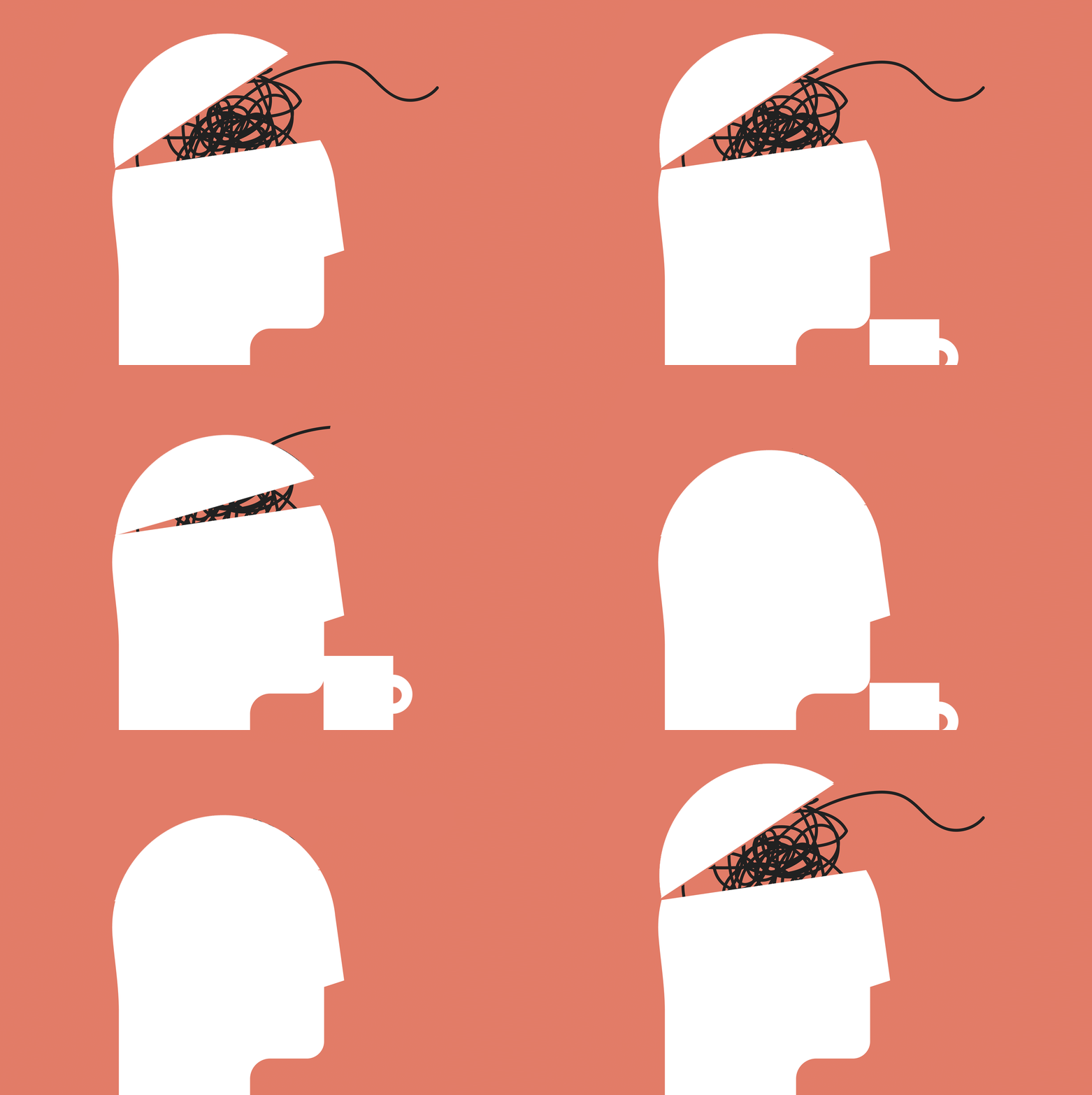
When coffee and anxiety are discussed together, the prevailing sentiment is that coffee, particularly caffeinated coffee, can lead to an increase in anxiety. This is generally attributed to caffeine’s psychoactive effect, ie the jitters. But a massive new study on the subject finds that the opposite is true. Coffee, in moderate doses, may actually lead to a decrease in mood and stress disorders like anxiety.
The study is set to be published next month in the Journal of Affective Disorders. For it, researchers from China’s Fudan University examined an extensive data set of over 461,000 individuals, who were followed for a median of 13.4 years. Per Science Alert, these participants were “all in good mental health at the start of the study period” and were asked to self-report coffee consumption as part of it.
In total, 18,220 instances of mood disorder and 18,547 instances of stress disorder were documented as part of the study. When accounting for other health factors like age, education, exercise, etc, the researchers found that those who consumed two to three cups of coffee a day had a significantly decreased risk of developing both stress and mood disorders. The outcomes for both followed a j-shaped curve; little to no effect was experienced by those who didn’t drink coffee, followed and an increasing effect up to two to three cups, before a decreasing and then negative effect into the higher daily consumption ranges.
Researchers also note the effects were experienced differently based on sex. Men experienced a more pronounced association than women. They also noted that the effect was present regardless of the coffee type consumed, including decaf, and if the participant had the genotype making it difficult for them to metabolize caffeine.
While the study included a large population size, the researchers note that the findings only establish a correlation and additional work will need to be done to see if coffee has a causal role in the outcomes.
Still, it’s good news for those concerned about how coffee may impact mood and stress. Science says it may not be so bad after all.
Zac Cadwalader is the managing editor at Sprudge Media Network and a staff writer based in Dallas. Read more Zac Cadwalader on Sprudge.


