So there I was, at the SCA Expo or World of Coffee or whatever we’re supposed to call it now, walking around the trade show floor. Attending these sorts of events and writing about them is in my blood at this point, and once you get beyond the halogen lights and convention center oxygen and the dozenth “when did you get in” small-talk converso, the scene can actually be a lot of fun. There’s always delicious things to drink. Some of the designed environments can be compelling. I am not so jaded as to be unable to appreciate seeing old friends and catching up. And there’s usually a free Perfect Bar or food pellet of some sort to be had.
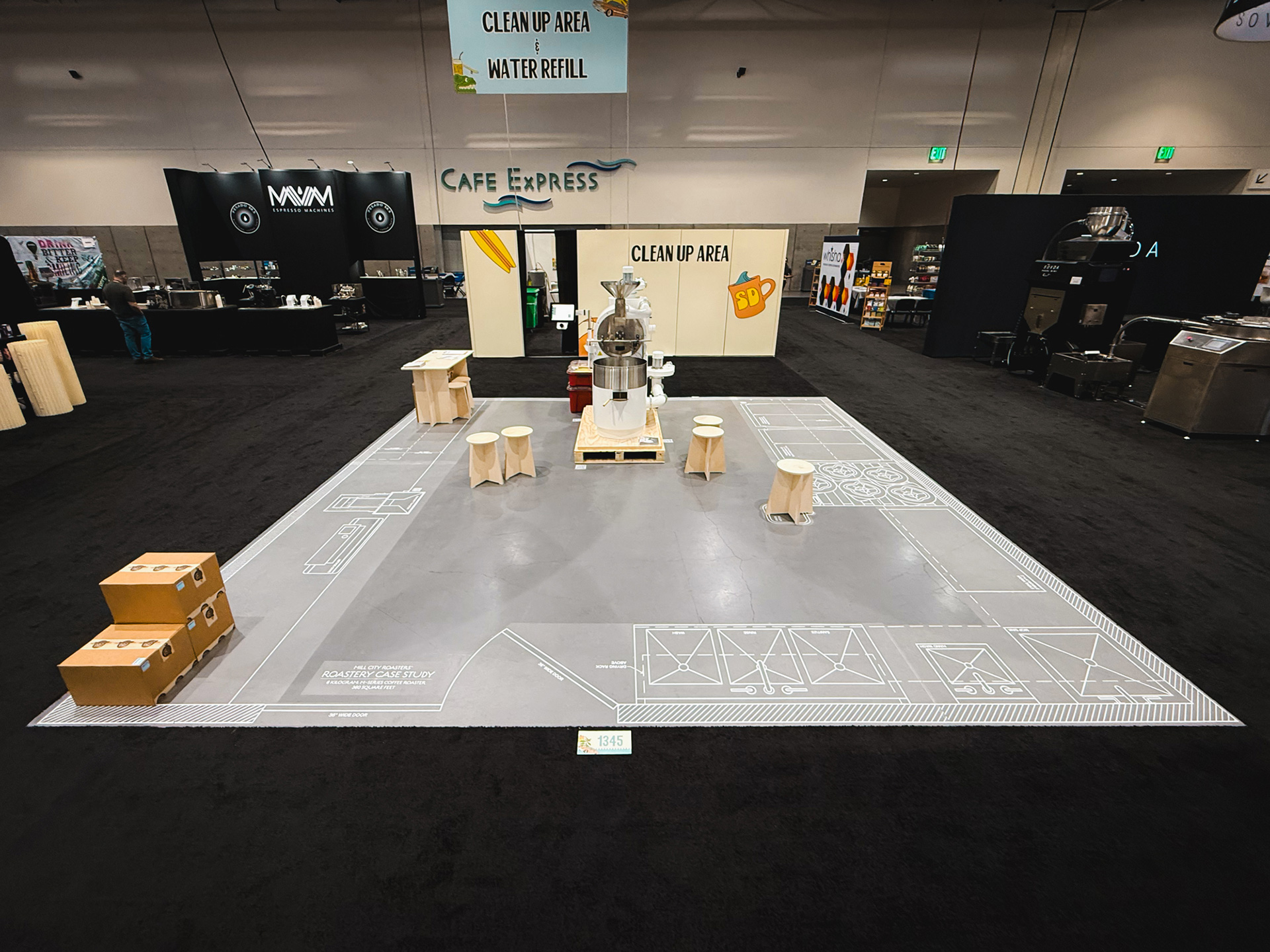
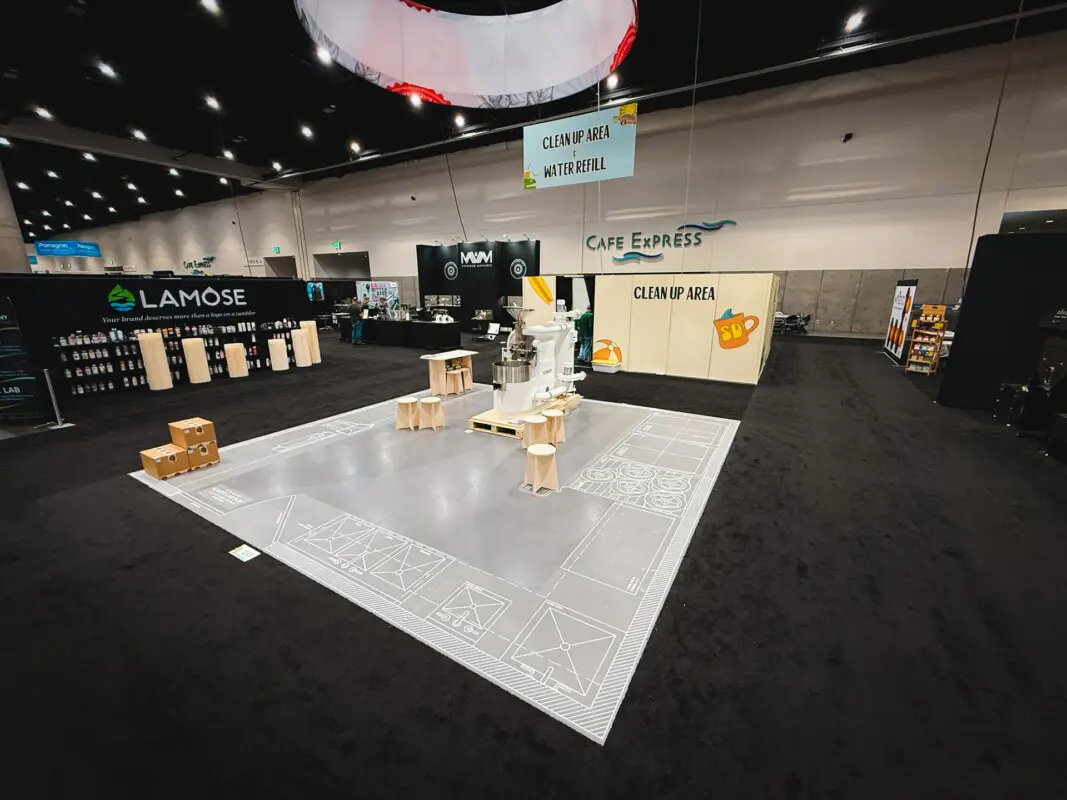
But this year, at the San Diego edition of World of Coffee, I encountered a booth so different, so uniquely considered and executed, that I found the whole thing to be unexpectedly moving, which is not something one often feels from a trade show space. It’s the work of Mill City Roasters, who conceived of an experiential “roastery case study” set-up in their 400-square-foot patch of the San Diego Convention Center.
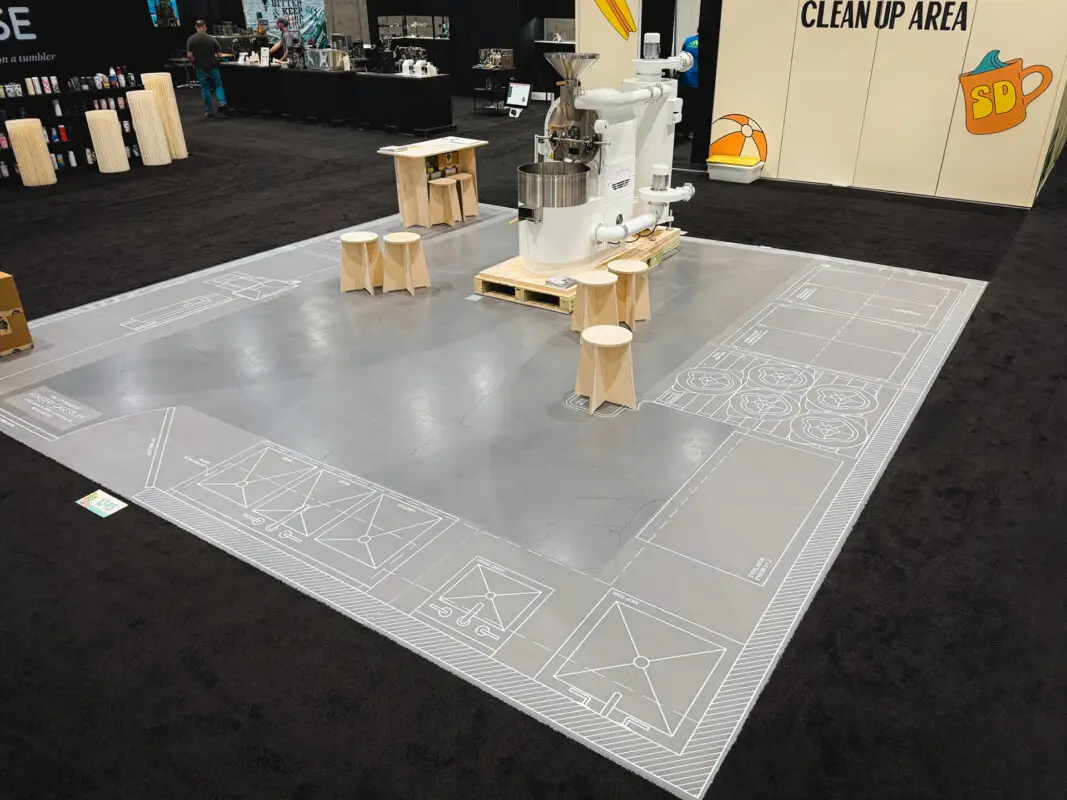
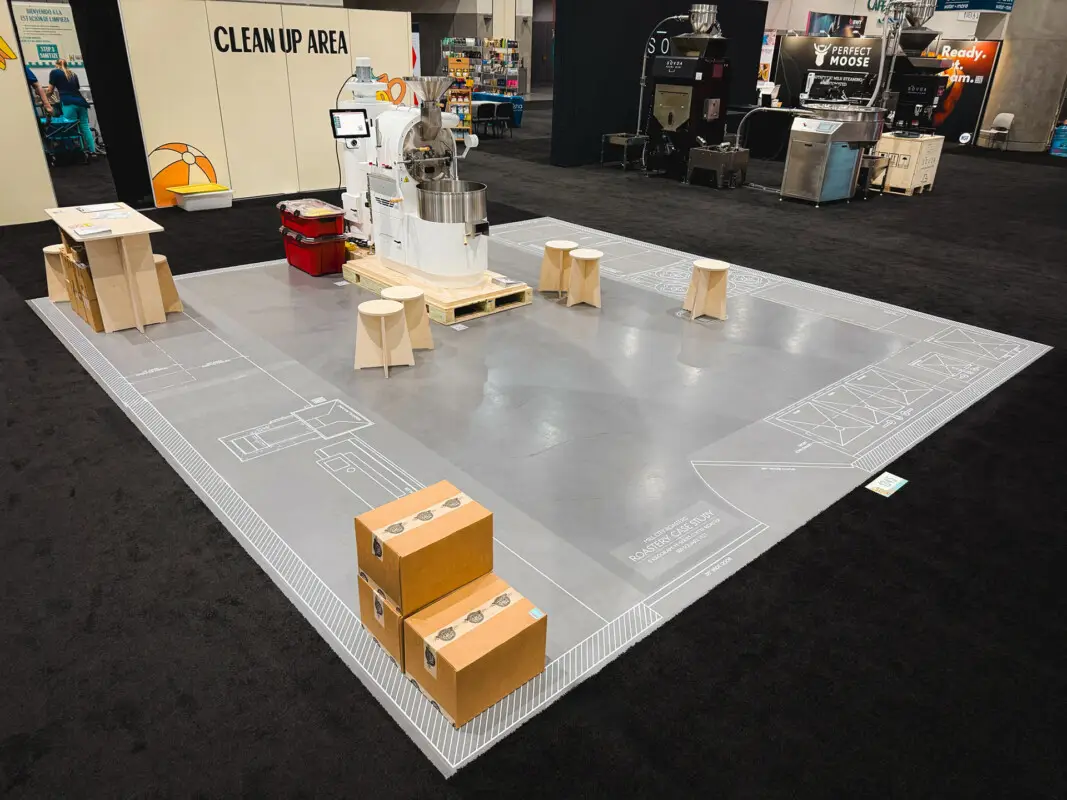
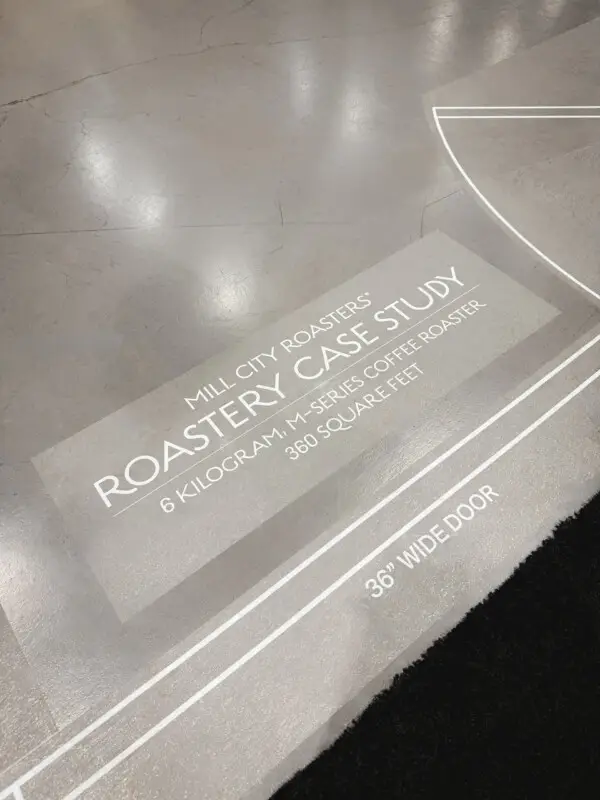
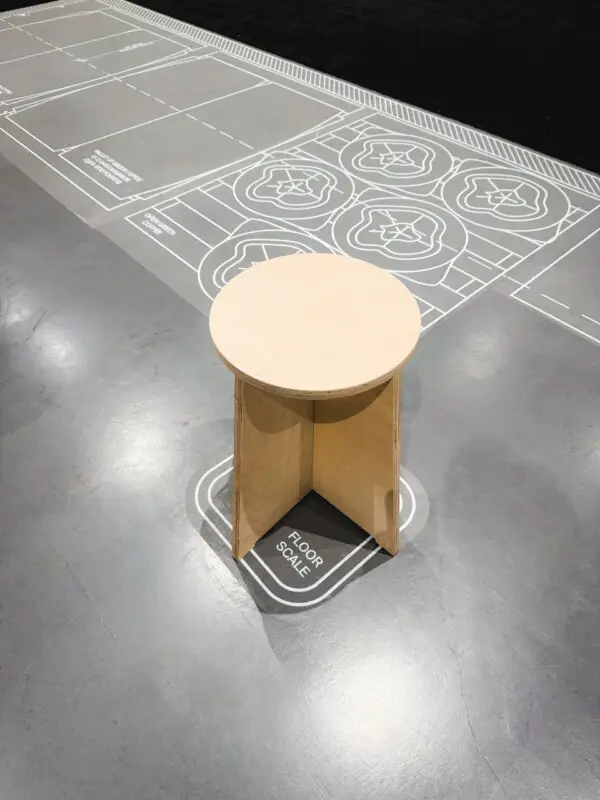
The concept is in effect a kind of “blueprint come to life,” in which Mill City laid out a two-car-garage sized roastworks setup using floor stickers, diagram text, a couple of floating tables, and a working unit in Mill City’s M-Series line. For me at the show, it felt like crawling around inside a CAD drawing but IRL. I don’t necessarily have any interest or desire in setting up my own roastworks—maybe someday!—but walking around this booth had me doing spatial math in my head. “How much room would I really need…”
After the show I couldn’t get the booth out of my head, and so I reached out to Mill City to learn more. I wound up chatting with Angie Davis, who is the VP Director of Operations & Design at the company, to learn more about how the booth was imagined, some of the unexpected challenges around bringing it to life, and why this unusual direction was worth the risk.
Hi Angie, thanks so much for talking with me. Where did the design inspiration for the “blueprint booth” come from—had you ever seen something quite like this before in an event context? Had Mill City played around with this concept previously? Tell me more about how you arrived at this idea.
Angie Davis: We knew early on that we wanted to keep the booth very minimal and let the new M-series roaster really be the star of the show. This was the first public viewing of our US-built machines and the vibe Steve [Green, Mill City founder and president] wanted was “Just the roaster under a spotlight”—sort of a mic drop moment after a long year of building our manufacturing facility. The challenge from a brand standpoint is that kind of minimalism on a show floor can easily tip from a “less is more” statement into looking like we didn’t have the time/money/creativity to figure this out.
A 400-square-foot trade show booth just happens to be the ideal space for a roaster with a six kilogram batch capacity, roasting 20 hours a week, and taking a greens delivery once a month. That is just math I’ve done over and over for customers throughout the years. Designing roastery spaces is a big part of purchasing a roaster from us. We always want to make sure that not only do you have the space for the roaster but you have the space needed to process the amount of coffee needed to make your business go.
I would love to know what the design process was like—did you fully demo out the booth design in Minneapolis before taking it to San Diego? How did you settle on the right materials to use for the floor?
In working with individual clients, I’ve tried a lot of 1:1 scale tools to get them to understand the physicality of the equipment, from printing out full scale drawings of a roaster footprint to mail to a client, to mapping out equipment and tables/shelves/pallets on the floor with painters tape. For this direct translation of my CAD drawing to the floor, I was probably inspired by those new ‘walkable floor plan’ businesses that have overhead LED projectors where you can walk a 1:1 scale drawing of your floorpans with your architect prior to starting construction. That gave me a vision for what this would look like at scale, but instead of projecting from above, we used floor decals right on the concrete floor of the convention center.
Similar to printed vinyl that you might put on a window/door or a car as brand signage, the floor decals were made from the same type of material with an anti-skid surface. I tested out a few different companies before hand to make sure they’d stay stuck but also be removable after the show without any floor damage.
I can imagine that the folks at the convention center might have been pretty surprised by your concept. How did all that work, with the actual implementation on the floor at the event? Were there surprises along the way?
We knew there was a chance the convention center would say no and when we submitted the booth for approval ahead of time, I was prepared to have to come up with a different idea. Once in San Diego, the install took about three hours of crawling around on the floor. Even though our booth was approved before the show, they were still concerned once they saw what I was doing. I explained we had tested it and showed them how it would come right up. I think they were mostly concerned that we would leave after the show and not peel it up. I assured them that we’re from Minnesota—we would never. 🙂
I love the IRL practicality of this space—it made me, someone who is not remotely in the market for a roasting machine, start thinking through the possibilities of how I might set something like that up someday. I’m really interested in how your design was able to evoke that sense of possibility; how does this tie in to the wider work you do at Mill City?
Education is the path through which most people come into our orbit and we’ve been in “education” mode at trade shows for last few years as the official roasting education sponsor of Coffee Fest. It’s second nature for us to look for opportunity to talk about what you need and what you’re trying doing, not just what we offer. For our customer, the biggest hurdle to starting a roastery is often finding the space which is generally a game of square footage: how much do I need, how much can I afford. After being in our booth, people can better visualize what ~400 square feet is and they have that layout in their head to help them evaluate how the space could be used and how it could scale.
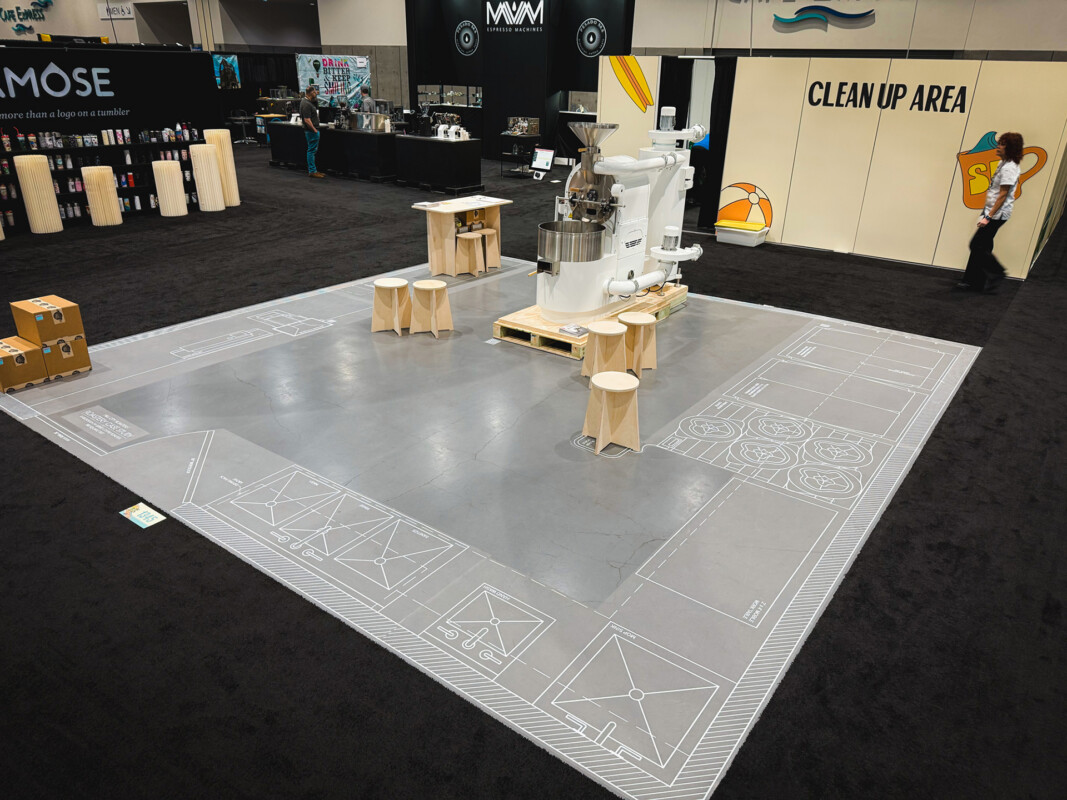
I love buildings and I am genuinely interested in how people bend their spaces to fit the workflow of coffee. Learning about people’s spaces and solving these types of problems are my favorite parts of my work and the booth design triggered a lot of those conversations. It was cool to see people step into the space and then look down and realize what they were standing in.
Do you think you’ll continue this style of booth design at future events? How are you feeling about the overall experience of implementing the concept?
I doubt the full floor plan decal will get approved again—it just made the show runners too nervous—but we’ll continue with our concept of a “Roastery Case Study” for the foreseeable future. The booth becomes more than just a brochure to sell a product. For us, it’s a great way to help them visualize what it will take, to make their dream of a future roastery a little more real.
Can you share more with me about the idea of a “roastery case study?”
I like to place roasters so that you can work on both sides of the cooling tray—typically loading green coffee from the right and roasted coffee comes out the front and shifts to the left. I try to accommodate “greens delivery day” in every floor plan. This is the most green coffee you’ll have in your space. I’m showing standard pallets off to the right of the roaster with space of two full pallets just arrived from your importer and third pallet for the last of your open inventory.
I like to put roasted coffee processing on the same side as the control panel. For users using automation like RoastPATH, you can safely pivot and bag a bunch of coffee while you’re waiting to hit turning point in your profile and still keep an eye on your roast curve. I show a full workbench on that side but that run could also be made of a series of tables which could easily be moved to your next roastery space when you’ve outgrown this 6kg and move to a larger space and a larger roaster. The other benefit of tables is that you can have them on wheels and reconfigure as a project requires. Having all your work surfaces on wheels is beneficial at any scale.
I included a three compartment sink, hand-wash station and mop sink in the plan as a reminder of what it takes to be a certified food manufacturer. In real life, these sinks are often located in adjacent spaces to a roastery but I squeezed them in here as a way of saying, “hey, don’t forget that coffee is food.” It’s one of the easiest ways to limit your revenue potential by choosing a space that cannot meet the sanitary requirements required to license your space for food manufacturing.
Double 36″ doors allow easier movement of pallets (and roasters) in and out. I’m not a fan of overhead doors. Double doors with one operable leaf are cost effective, take up less space on your wall, and have less functional issues over time. If you’re leasing, converting a single door to double doors is typically an easier ask of a building owner.
I take advantage of overhead storage—drying racks above sinks, shelves above coffee pallets, shelves above work spaces. You will accumulate stuff – there’s going to be that one box of coffee bags that has a misprint and you can’t bear to throw them out because you’ll use them for friends and family. That box goes on that high shelf.
The stools shown in the photos are about the height and diameter of a five-gallon bucket which is common at this scale to have a set for green coffee and a set for roasted. The stools were helpful in imagining an in-process roast day. Pro tip: want people to linger in your trade show booth? Let them sit down.
If you didn’t get to visit us at World of Coffee, 400 square feet is about the size of a snug two-car residential garage. One built in the early 80s, when it was still just for cars, and maybe a push mower.
Thank you so much.
Jordan Michelman (@suitcasewine) is a co-founder and editor at Sprudge Media Network.