
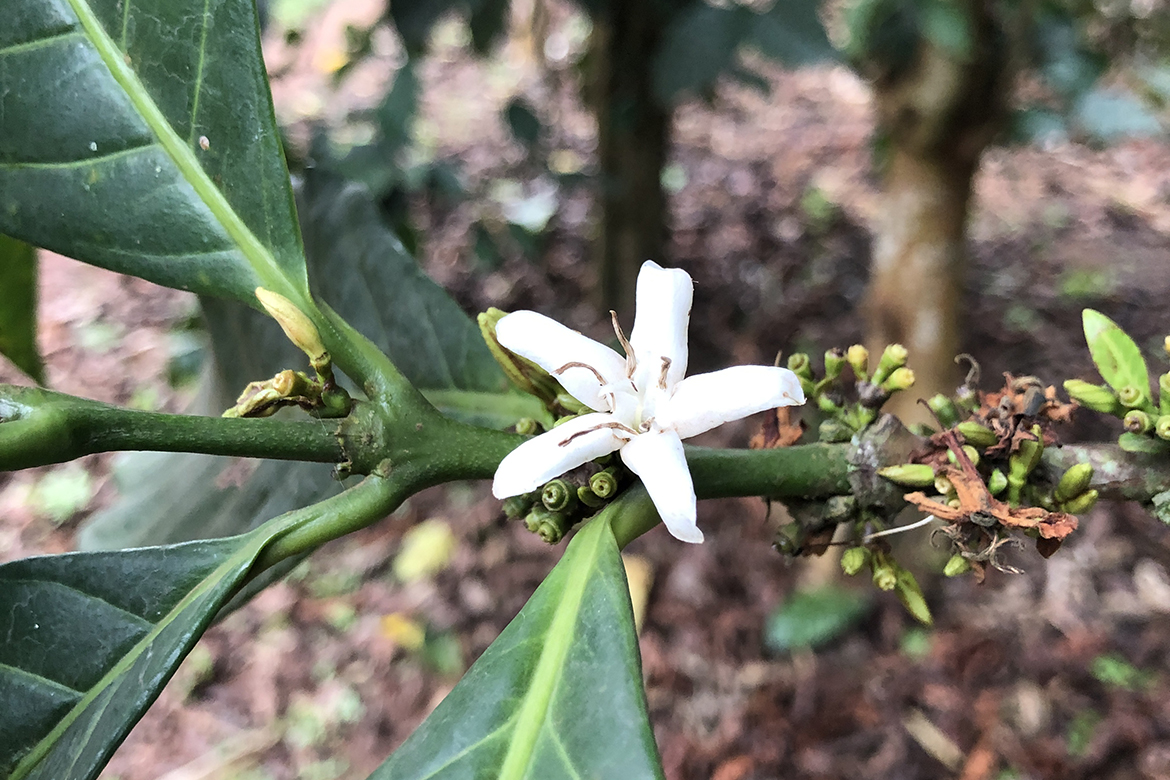
London’s Kew Gardens is one of the most respected coffee research institutions on the planet. Led by Dr. Aaron Davis, the researchers at Kew have been exploring lost and wild coffee species in hopes of finding an answer to climate change, much of which we have previously covered here on Sprudge. And their latest research continues that search with a promising new hybrid. Introducing Libex, a coffee hybrid of Excelsa and Liberica.
Published recently in the Nature journal Scientific Reports, Dr. Davis et al examined 113 different hybridized accessions of Excelsa and Liberica coming from three different continents. The two species hybridize easily with one another and have been found in countries across Southeast Asia, Central America, Africa, and India. They are said to “exhibit intermediate characteristics and overlapping values for key agronomic traits” from their parent species.
Most notably, the new hybrid, which they formally named Coffea × libex, could expand potentially growing regions into ares where Arabica and robusta are difficult or impossible to cultivate.” Libex also has been shown to have a higher yield than Liberica, which would help farmer profitability. And its thinner pulp and parchment means it is conducive to an easier, more efficient post-harvest processing.
Per the study, Libex also has a smaller seed size, more akin to that of Arabica, which will help in processing, roasting, and grinding, and initial taste tests find Libex to be more palatable to coffee drinkers than Liberica. It is also believed that Libex possesses Liberica’s resistance to leaf rust, which Excelsa does not typically possess.
“The development and establishment of a broader range of coffee species and hybrids is likely to play a key role in coffee farming sustainability in an era of accelerated climate change,” the study states. “[These] hybrids also have the potential to broaden the climate envelope for successful coffee cultivation and transfer disease resistance.”
It is yet another exciting discovery. The future of coffee may exist outside of the Coffee Belt and outside of Arabica, and thanks to the work of the people at Kew and their research partners, we may have a few options.
Zac Cadwalader is the managing editor at Sprudge Media Network and a staff writer based in Dallas. Read more Zac Cadwalader on Sprudge.


